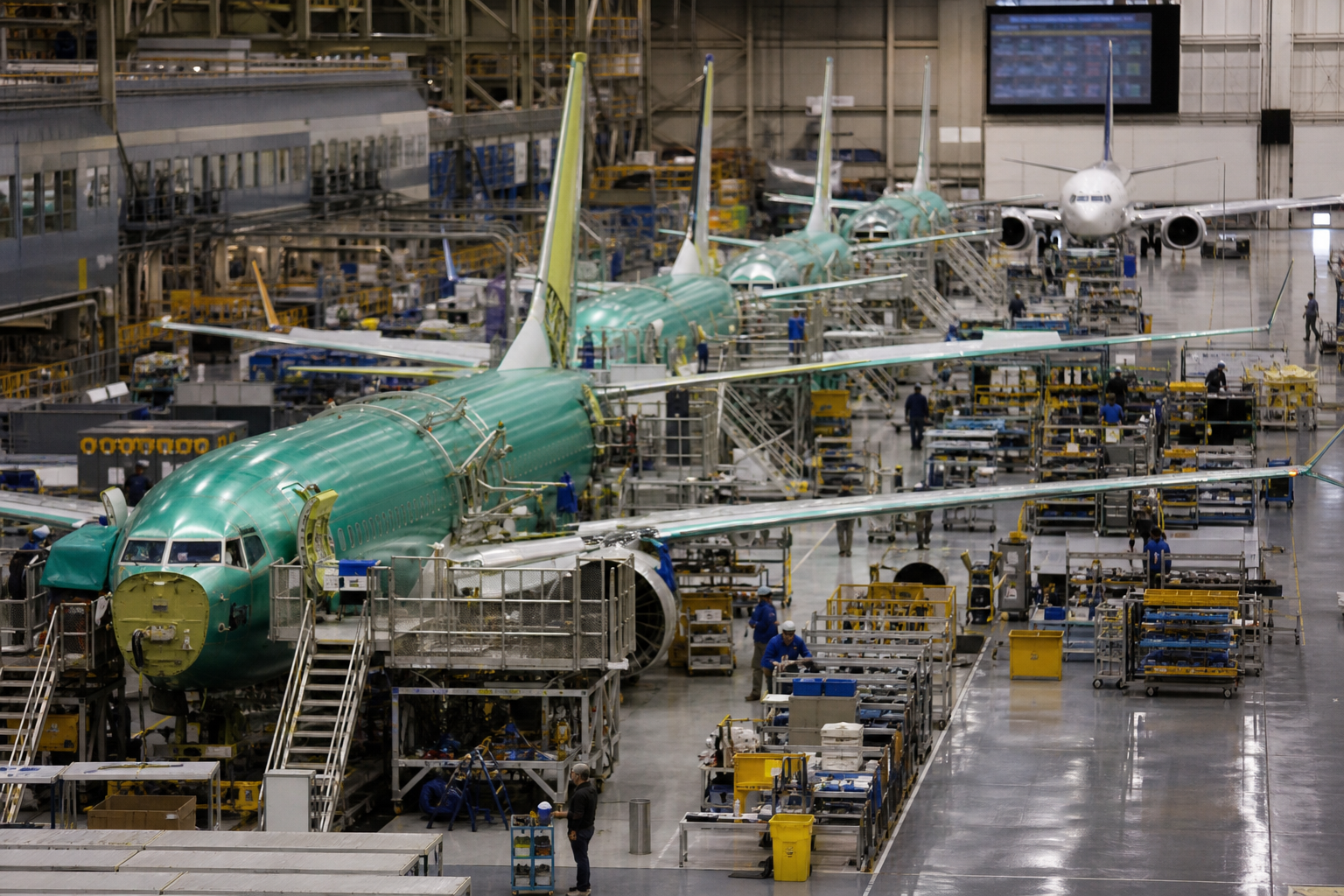
In an audacious move that could reshape its financial trajectory, Boeing has announced the launch of a new 737 Max final assembly line in Everett, Washington, set to begin production on July 6. This ambitious plan aims for a production rate of 52 jets per month, a clear indicator of the company’s confidence in the recovery of demand for its aircraft.
The implications of this decision extend far beyond the factory floor. A robust production ramp-up for the 737 Max suggests not only a resurgence in market demand but also signals a potential turning point in Boeing's financial performance. Investors should be keenly aware of how this development could influence both revenue growth and the overall health of Boeing's supply chain.
Demand Recovery Signals
The 737 Max has faced its share of turbulence, both from regulatory scrutiny and a shift in consumer preferences during the pandemic. However, the decision to increase production to 52 jets per month indicates a significant rebound in demand. This could be tied to a broader recovery in air travel as global economies stabilize and airlines look to expand their fleets.
Moreover, the new assembly line is not merely a response to current demand but a proactive strategy to capture future market share. By ramping up production, Boeing is positioning itself as a strong contender in the commercial aviation sector, potentially outpacing competitors who may be slower to react.
Financial Performance and Investor Implications
For investors, the implications of this production boost are profound. A consistent output of 52 jets per month could lead to an uptick in revenue that many stakeholders have been eagerly anticipating. Analysts will be watching closely to see how this impacts Boeing's quarterly earnings, especially as the company seeks to recover from previous losses.
Furthermore, the increase in production rates could also alter Boeing's supply chain dynamics. As the company scales its operations, it will need to ensure that its supply chain can support this ambitious plan without disruption. Investors may want to keep an eye on how Boeing manages its relationships with suppliers and whether it can maintain quality and efficiency at this increased pace.
Conclusion
Boeing's decision to launch a new 737 Max assembly line is a bold statement of intent in a recovering market. For investors, the key takeaway is clear: monitor the production rates, financial performance, and supply chain dynamics closely. The potential for revenue growth is significant, but so are the risks associated with scaling operations.
As always, the market will be watching closely as Boeing embarks on this new chapter. The stakes are high, and the outcomes could shape the future of the company and its investors for years to come. For more on this announcement, see the full details here.
Bull/Bear Verdict
Bull Case: The ramp-up to 52 jets per month indicates strong demand recovery, potentially leading to significant revenue growth for Boeing.
Bear Case: Challenges in supply chain management could hinder production efficiency, impacting Boeing's financial performance.