The nuclear-fuel supply chain is becoming a strategic battleground, and Centrus Energy’s $116 million acquisition of Westerman puts that reality in sharp focus. The transaction is not a reported share-price event. It is a corporate-development move aimed at strengthening control over a critical part of uranium enrichment infrastructure.
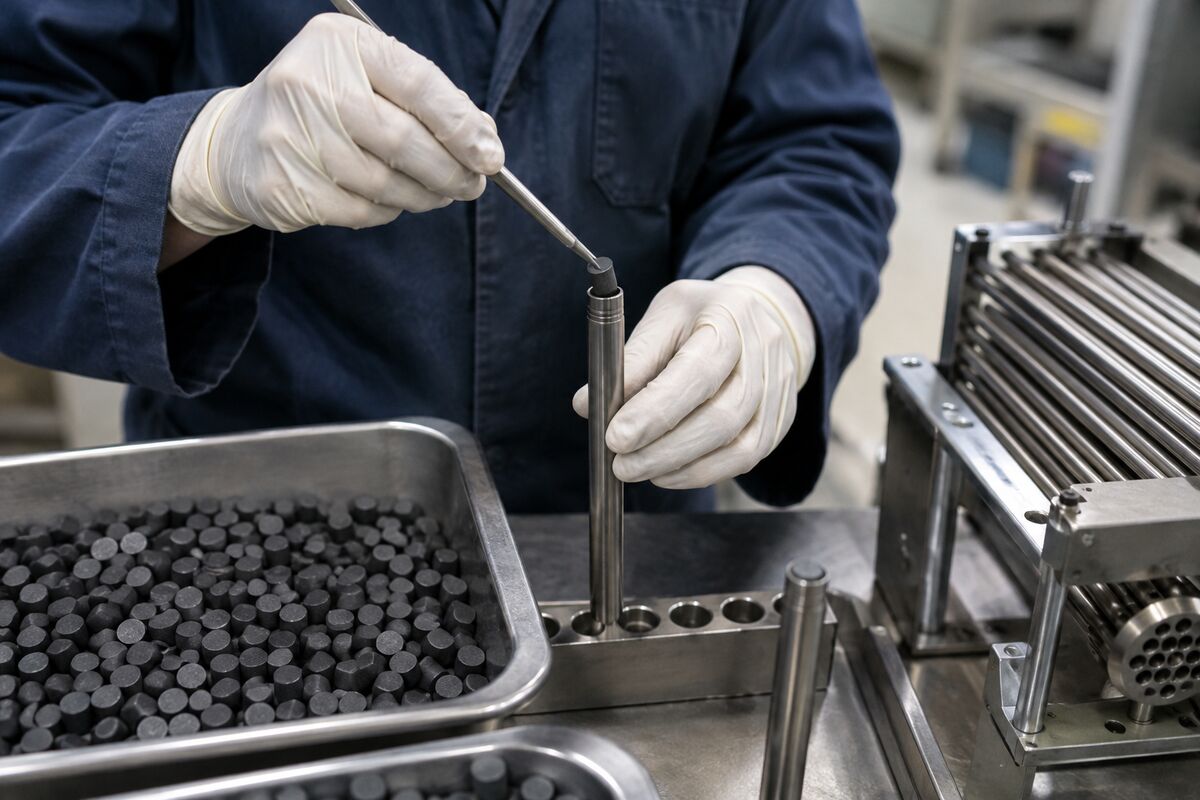
Westerman is described as a key centrifuge supplier. That matters because centrifuges are central to the uranium enrichment process, and their availability can influence how quickly enrichment capacity is expanded. By acquiring the supplier, Centrus Energy could gain greater control over an important link between enrichment plans and the equipment needed to support them.
As reported by Seeking Alpha, Centrus Energy agreed to acquire Westerman in a deal valued at $116 million. The price gives investors a concrete measure of the strategic commitment, even though the available source material provides no details on expected financial results, transaction funding, or the effect on Centrus Energy’s shares.
Vertical integration moves to the center of the thesis
The straightforward interpretation is that Centrus Energy is seeking to deepen its vertical integration. Rather than relying entirely on an outside supplier for a key centrifuge-related component, the company would bring that capability inside its corporate structure.
That does not eliminate execution risk. Ownership of a supplier does not automatically translate into faster deployment, lower costs, or higher production. But it may improve coordination across the uranium enrichment chain and give Centrus Energy more direct influence over equipment availability. In an industry where specialized infrastructure is strategically important, that control could become a meaningful competitive consideration.
This is the part of the deal that deserves more attention than the headline price. Centrifuge supply is not a generic procurement issue. It is tied to the physical capacity required to enrich uranium, making supplier access relevant to the broader security of the nuclear-fuel system.
A deal aligned with U.S. fuel-security priorities
The acquisition arrives as the United States seeks to expand domestic uranium enrichment capacity and reduce reliance on Russian enriched uranium. That policy backdrop gives the transaction significance beyond a conventional supplier acquisition.
Centrus Energy is characterized as a critical participant in U.S. domestic uranium enrichment capacity. Adding Westerman, described as a key centrifuge supplier, could therefore help align the company’s internal capabilities with a national effort to build a more resilient domestic nuclear-fuel supply chain.
For investors tracking nuclear fuel security and critical-minerals themes, the strategic logic is clear: supply-chain ownership may matter as much as headline production capacity. If equipment availability becomes a constraint, companies with stronger control over specialized suppliers could be better positioned to support expansion. That is a possibility, not a guaranteed outcome, and the assignment provides no operating forecasts to quantify the potential benefit.
What investors can—and cannot—conclude
The $116 million value establishes the scale of Centrus Energy’s commitment. The Westerman acquisition also signals that the company views centrifuge supply as important enough to bring under greater corporate control.
Still, investors should distinguish strategic rationale from financial proof. No stock-price reaction was provided, and there are no sourced figures here for revenue, earnings, margins, production volumes, or capacity additions. The available facts support an analysis of positioning, not a conclusion about near-term market performance.
The bottom line: Centrus Energy is using a $116 million transaction to reinforce its place in a U.S. uranium enrichment ecosystem that Washington wants to expand. The deal may strengthen vertical integration and improve supply-chain control, while its ultimate value will depend on how effectively that ownership supports domestic enrichment capacity.
Bull/Bear Verdict
Bull Case: The $116 million acquisition may strengthen Centrus Energy’s vertical integration by adding a key centrifuge supplier, potentially improving control over equipment availability as the U.S. expands domestic uranium enrichment capacity.
Bear Case: The deal’s strategic rationale is clear, but no sourced data shows its effect on revenue, earnings, capacity, or the share price; the financial payoff could therefore remain uncertain.