
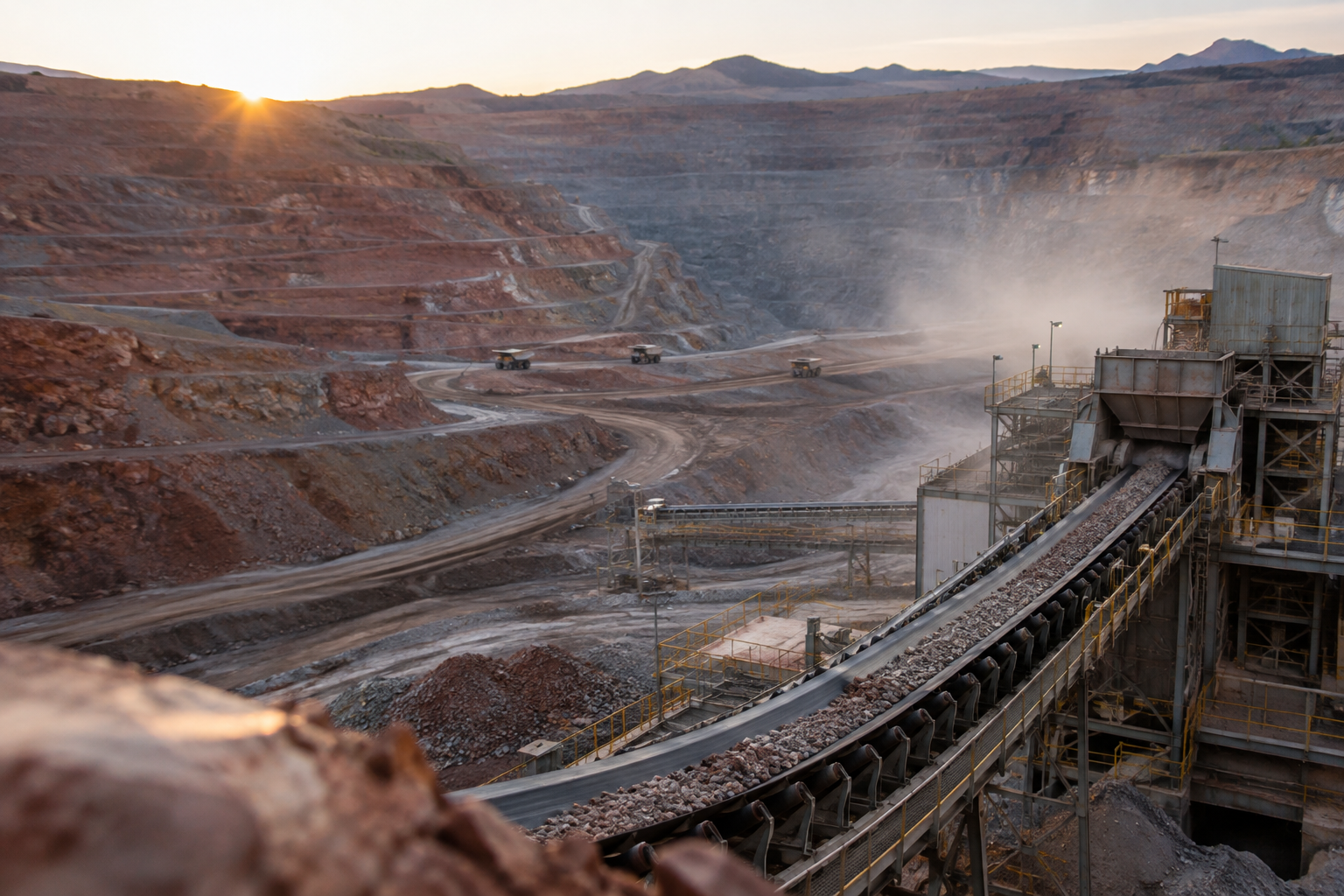
Copper’s record $6.83 per pound is not simply another artificial-intelligence trade. The sharper explanation is supply: mine disasters, declining ore grades, constrained production and a decade of capital underinvestment have collided with a market that has little room for error.
For US and Canadian copper producers and developers, that distinction matters. A supply-driven rally may offer more durable operating leverage than a short-lived demand narrative, while a potential US tariff regime could redirect attention toward North American sourcing and alter how copper equities are valued heading into 2027.
The latest move places physical availability at the centre of the story. Copper reached a record $6.83 per pound as mine disruptions tightened global supply, while exchange-monitored inventories in China fell to 47,147 tons. That inventory figure is not a cosmetic detail. It indicates that visible material is becoming scarcer even as the market confronts production constraints that cannot be solved quickly.
As the reported supply shock illustrates, disasters at mines can remove output abruptly. Declining ore grades create a slower-moving problem: producers may need more work, capital and processing effort to generate the same volume of copper. Years of underinvestment compound that pressure by limiting the pipeline of new production.
This is a supply story first
AI and electrification remain familiar parts of the copper narrative, but they should not obscure the immediate market signal. The current rally is primarily being driven by constrained supply, falling inventories and a production base weakened by underinvestment. Demand can support prices, but supply determines how quickly the market can respond when demand holds firm.
That is why the rally may matter disproportionately for US and Canadian copper companies. A higher copper price can expand the difference between revenue per unit and the costs required to produce or develop that unit. For operating mines, that may create operational leverage: relatively small changes in realized copper prices could have a larger effect on operating performance when fixed costs represent a meaningful part of the cost structure.
For developers, the transmission mechanism is less immediate but still important. A stronger copper price environment could improve the perceived economics of projects, strengthen the value of future production and draw greater attention to domestic or North American supply options. That does not eliminate permitting, construction, financing or execution challenges. It does mean the commodity backdrop may become a more influential variable in project assessments.
Tariffs could redraw the North American map
The US Commerce Department has floated a 15% tariff on refined copper imports beginning January 1, 2027, with higher tariffs potentially following. The proposal remains a potential policy change, not a settled outcome. Even so, it introduces a second force into the equity story.
A tariff on refined imports could encourage North American sourcing by changing the relative economics of imported and regionally available material. That may increase the strategic value assigned to US and Canadian copper producers and developers, particularly if buyers place a premium on supply certainty within the continent. It could also influence valuation: equities tied to North American resources may receive greater attention if investors begin pricing in a more supportive domestic supply framework.
But tariffs would not automatically translate into stronger results for every producer or developer. The benefit could depend on whether a company produces refined copper, sells material into affected markets or remains exposed to other bottlenecks. Policy uncertainty may also make valuation work more sensitive to assumptions about timing, scope and the possibility of higher tariffs later.
The market’s message is therefore clear but not uncomplicated. Copper at $6.83 and Chinese monitored inventories at 47,147 tons point to a physically tight market. The deeper issue is whether years of underinvestment and declining grades have created a supply problem that lasts beyond the latest disruption. If so, North American copper equities may increasingly be judged not only on production plans, but also on their position in a reshaped regional supply chain.
Bull/Bear Verdict
Bull Case: Copper at a record $6.83, Chinese exchange-monitored inventories at 47,147 tons and a potential 15% US tariff could support operating leverage and greater valuation attention for North American producers and developers.
Bear Case: Mine disruptions may prove temporary, while tariffs remain only a floated policy; project execution, declining ore grades and constrained production could limit how fully US and Canadian equities capture the copper price.