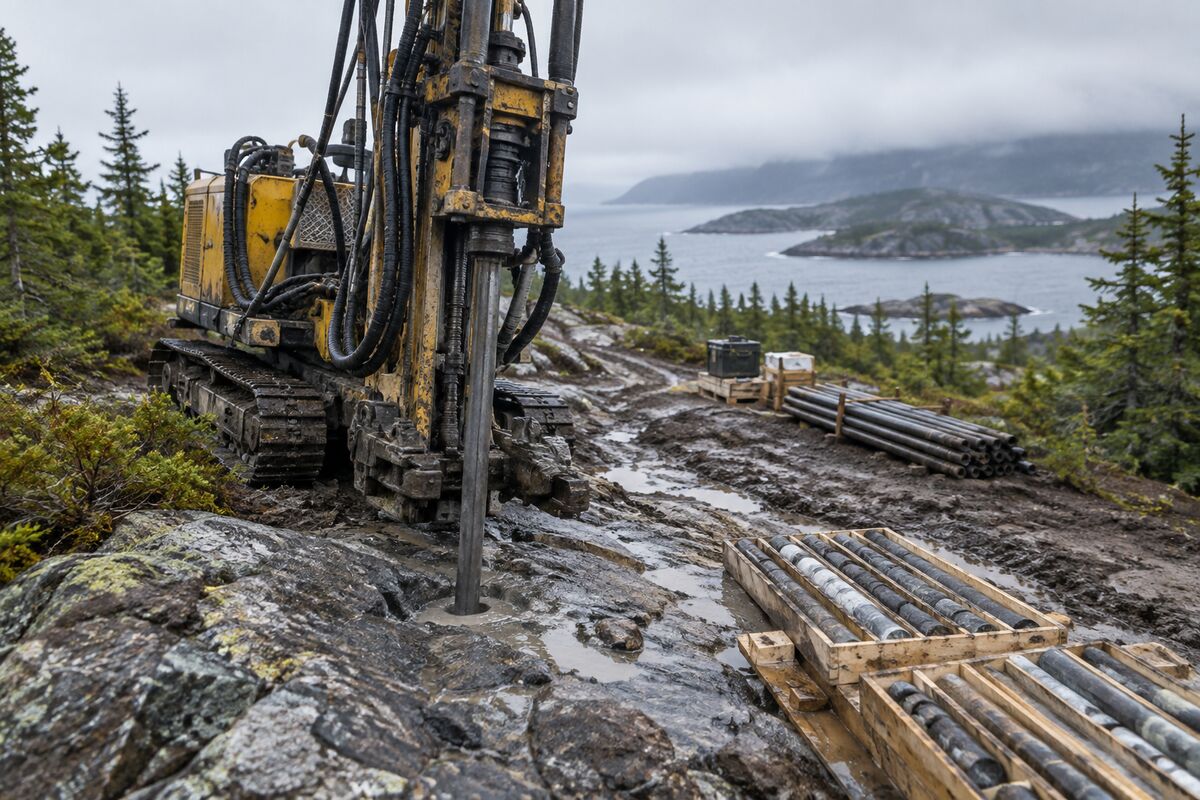
First Atlantic Nickel & Cobalt Corp. is placing a sizable piece of Western Newfoundland on the critical-minerals map: the company has announced plans to acquire 100% of the North Arm Project, a 52-square-kilometre property of mantle-derived ultramafic rocks.
The hook is not a confirmed discovery. It is the unanswered question beneath the ground. North Arm has never been systematically tested for geologic hydrogen, chromium or awaruite nickel-cobalt alloy, leaving First Atlantic with a broad exploration canvas—and a correspondingly large measure of geological uncertainty.
For investors watching the TSX Venture Exchange’s critical-minerals universe, that combination can be compelling. A Canadian property with a 52-square-kilometre footprint offers room for a coherent exploration strategy rather than a narrow, single-target story. But the North Arm narrative remains firmly in the potential stage: First Atlantic is outlining what the property could contain, not reporting a confirmed resource or discovery.
One property, two exploration themes
North Arm brings together two distinct exploration themes. The first is geologic hydrogen, an emerging area of mineral exploration that First Atlantic says has not been systematically tested at the property. The second is the possibility of nickel-cobalt mineralization associated with awaruite, a nickel-cobalt alloy, alongside chromium potential.
That dual focus gives the proposed acquisition a wider lens than a conventional one-commodity exploration story. The ground’s mantle-derived ultramafic rocks are central to the thesis because they provide the geological setting First Atlantic is targeting for these themes. Yet the same fact also underscores the work still ahead: the property’s geology may be prospective, but the assignment provides no evidence that systematic testing has established economic mineralization or geologic hydrogen.
In other words, North Arm is a map and a hypothesis. The next chapter would be about testing that hypothesis.
Why the TSXV audience may pay attention
First Atlantic’s proposed acquisition may attract attention among critical-minerals investors because it combines a full-property transaction with an underexplored Canadian land position. The company is not describing a small addition around an already tested occurrence; it is pointing to 52 square kilometres where three target areas—geologic hydrogen, chromium and awaruite nickel-cobalt alloy—have not been systematically evaluated.
That creates room for exploration upside if testing identifies meaningful mineralization or hydrogen potential. It also creates room for disappointment if the geological concepts do not translate into confirmed results. The distinction matters. Untested ground can offer discovery potential, but it cannot substitute for evidence.
First Atlantic Nickel & Cobalt Corp. trades under $FAN on the TSX Venture Exchange, $FANCF over the counter and $P210 on the FSE. The company’s announcement, reported by Investing News, frames North Arm as an exploration opportunity built around what has not yet been tested.
Potential first, proof later
The cleanest way to read the North Arm proposal is as an early-stage geological wager. First Atlantic would acquire 100% of a property with a sizeable footprint and multiple untested targets. That may give the company flexibility in defining an exploration program, while the absence of systematic testing leaves the central questions unresolved.
For now, the story is less about a result than a search area. Geologic hydrogen could provide one exploration direction; chromium and awaruite nickel-cobalt alloy provide another. Whether either theme develops into a confirmed discovery remains unknown based on the details provided.
Bull/Bear Verdict
Bull Case: The planned 100% acquisition would give First Atlantic exposure to 52 square kilometres of mantle-derived ultramafic rocks with untested geologic hydrogen, chromium and awaruite nickel-cobalt alloy potential.
Bear Case: The same ground has never been systematically tested, so the 52-square-kilometre opportunity remains exploration potential rather than a confirmed discovery or established mineralization.