Canadian exploration finance is showing signs of life. Within roughly 24 hours, Canuc Resources, Au Gold Corp. and Galway Metals disclosed financings tied to gold, antimony and broader exploration spending—an important change in tone for a market segment that depends heavily on periodic access to speculative capital.
The numbers are meaningful, but they are not a substitute for discovery. Canuc closed a $5.99 million private placement, Au Gold secured $3.5 million, and Galway completed a flow-through placement with shares trading at 0.94 CAD. Together, the transactions suggest that capital is again moving toward TSX Venture exploration stories as elevated gold and antimony prices improve the sector’s financing backdrop.
The financing signal
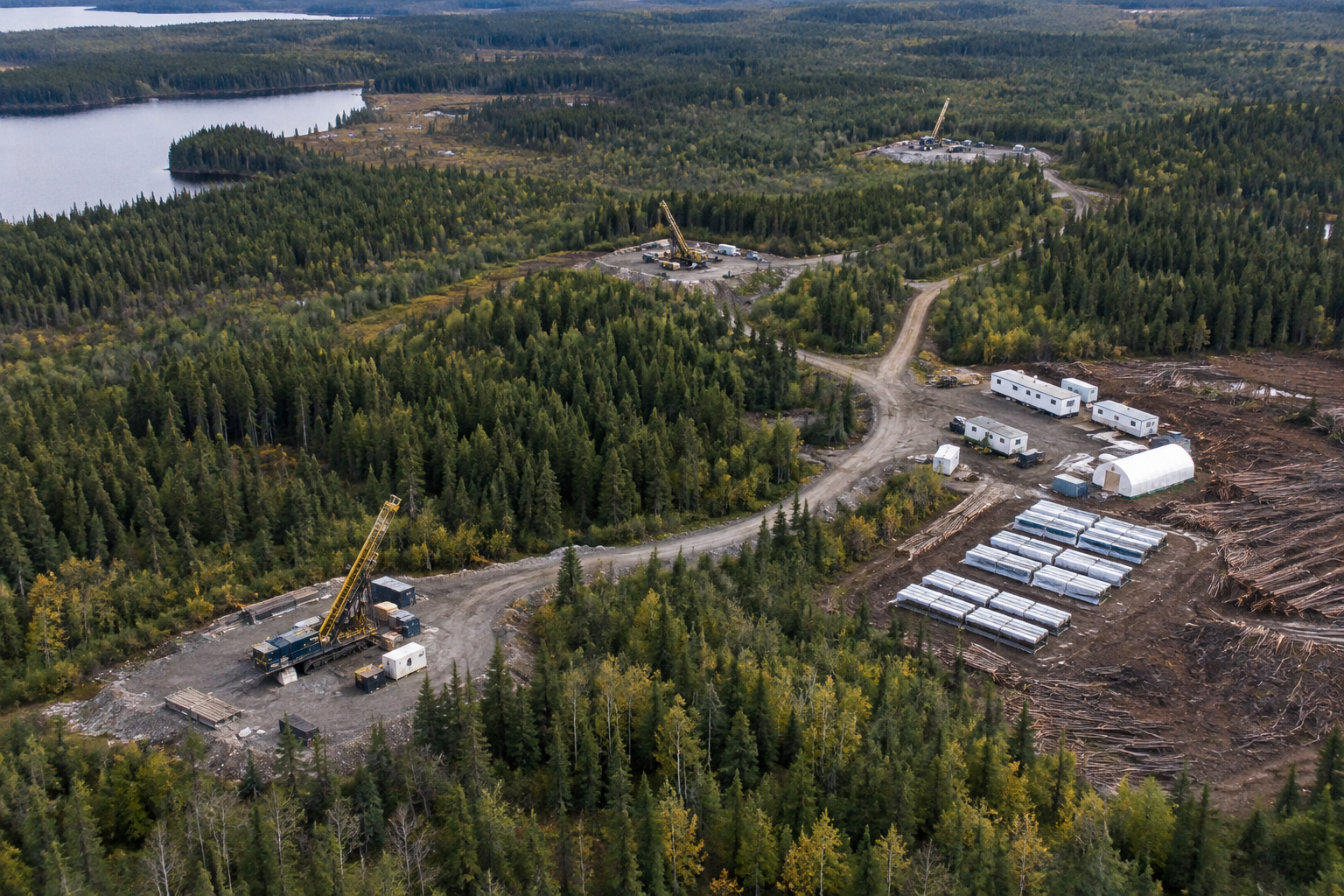
Canuc’s placement is earmarked to accelerate development and exploration at its 100%-owned East Sudbury Project. The company’s announcement provides the clearest example of financing being linked directly to a defined Canadian exploration asset: Canuc closed a $5.99 million private placement for East Sudbury work.
Au Gold Corp. ($AUGC) added another data point, securing $3.5 million in a non-brokered private placement to advance its Havelock gold-antimony exploration project. The combination of gold and antimony exposure is notable because both commodities are part of the current speculative-mining narrative, while the financing gives the company capital to continue project work rather than relying solely on future market access.
Galway Metals ($GWM) completed a flow-through placement for eligible Canadian exploration spending, with its shares trading at 0.94 CAD. Flow-through structures are particularly relevant to Canadian exploration companies because they can direct financing proceeds toward qualifying Canadian exploration expenditures. That tax-advantaged structure may make financings more attractive to eligible participants, but it does not eliminate the shareholder trade-off: issuing new shares can dilute existing holders.
Why the TSX Venture matters
TMX Group’s September data adds market-structure context. The TSX and TSX Venture Exchange listed more mining companies than any other exchange group globally. For Canadian retail and institutional investors, that concentration makes the Venture a central venue for monitoring exploration finance, commodity sentiment and early-stage mining activity.
The recent cluster therefore matters beyond the individual dollar amounts. Financing volume may function as a leading indicator for exploration activity into 2027. If more companies can raise capital, field programs, drilling campaigns and technical studies may become more frequent. That could also support speculative interest in mining stocks, particularly when gold and antimony prices remain elevated.
Still, financing activity is an input—not an outcome. A larger treasury may extend a company’s exploration runway, but it does not establish an economic discovery, permitting approval or a viable mine plan. The market’s next test is whether these financings translate into measurable exploration progress.
The risks behind the capital window
- Execution risk: Capital must be converted into exploration work, technical results and project advancement. Delays or disappointing results may weaken the financing signal.
- Dilution risk: Private placements increase the share count. Flow-through financing may improve access to capital while still reducing each existing shareholder’s proportional ownership.
- Permitting risk: Exploration and development schedules can depend on regulatory approvals and other permitting requirements.
- Discovery risk: Gold and antimony exposure can attract speculative capital, but exploration outcomes remain uncertain and project economics may not be established.
Gossan Resources is also among the companies identified in this Canadian critical-minerals financing discussion, although the supplied data does not specify a financing amount or project allocation for the company. That distinction matters: a watchlist can broaden with sector momentum, but company-level conclusions require company-level numbers.
For traders, the key metric may be the pace and quality of follow-on financings rather than any single announcement. For longer-horizon market participants, the more important question is whether treasury growth produces drilling, permitting progress and credible technical evidence. The current window is constructive for capital formation, but the TSX Venture remains a venue where financing headlines can arrive well before operating proof.
Bull/Bear Verdict
Bull Case: Canuc’s $5.99 million placement, Au Gold’s $3.5 million raise and Galway’s flow-through financing may indicate that elevated gold and antimony prices are reopening capital markets for TSX Venture explorers, potentially supporting exploration activity into 2027.
Bear Case: The financings may also bring dilution and do not resolve execution, permitting or discovery risk; capital raised by Canuc, Au Gold and Galway could fail to produce the technical progress needed to sustain speculative interest.