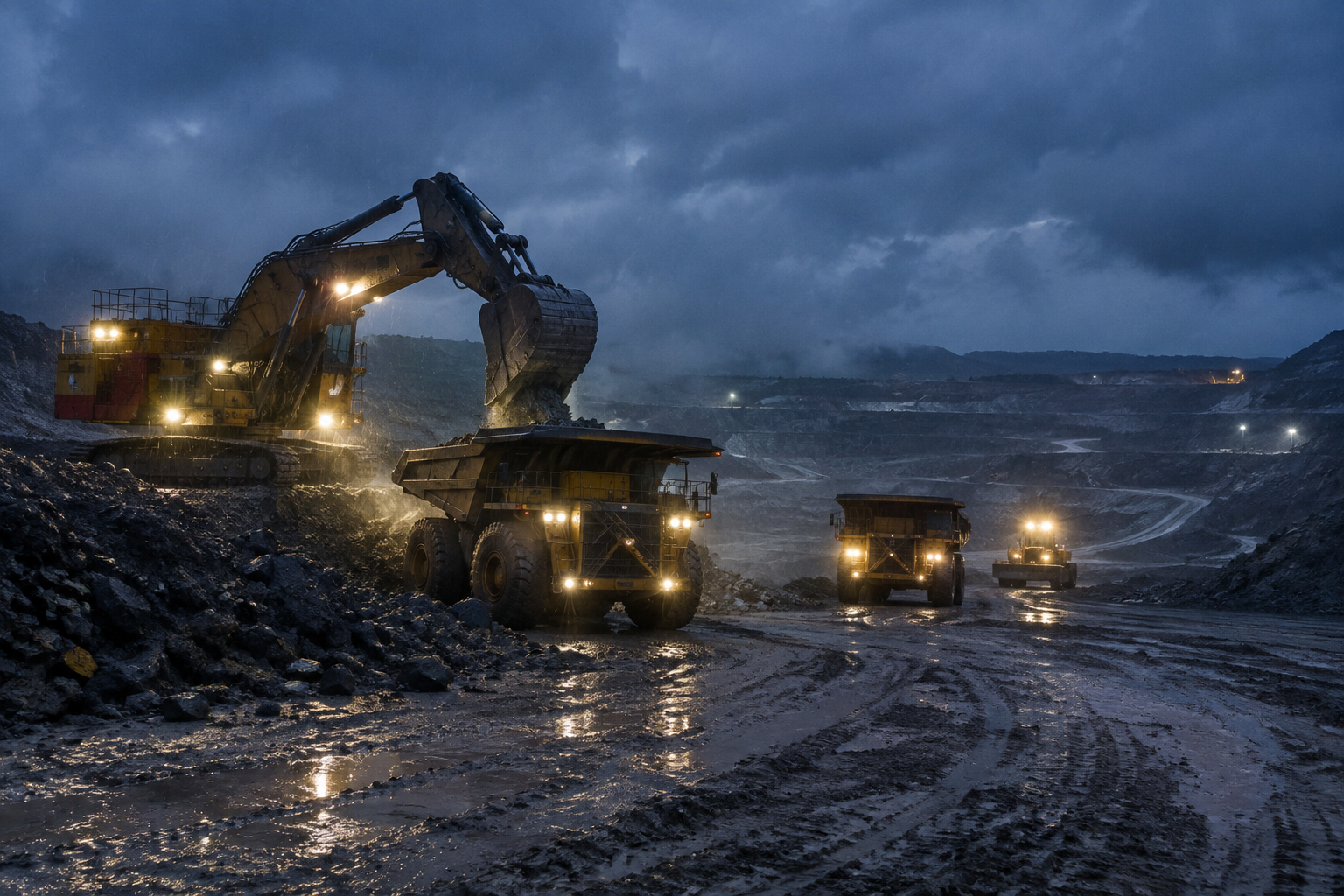
Mining margins are often decided long before the metal reaches the market. On October 2, 2026, Aura Minerals Inc. announced a definitive agreement to acquire Newco, a company that will hold the mining fleet, related equipment leases and dedicated operations supporting three of its producing assets.
For investors in Aura’s Nasdaq-listed $AUGO and B3-listed $AURA33 shares, this is more than an organizational change. It is a direct test of whether greater control over the equipment and people responsible for mine activity can translate into a more manageable cost structure, stronger operating leverage and better margin visibility—without assuming benefits that have not yet been quantified.
The transaction covers the Apoena, Almas and Borborema mining operations. As described in the company’s October 2 announcement, Aura signed a definitive agreement to acquire Newco, which will hold the mining fleet, related equipment leases and dedicated operations.
Why fleet ownership changes the conversation
Mining companies can outsource portions of fleet activity to limit direct responsibility for equipment and operating teams. That structure may offer simplicity, but it can also leave the mine operator with less direct control over the assets and processes that influence productivity, maintenance and scheduling.
Bringing those elements in-house could give Aura greater authority over how equipment is deployed across Apoena, Almas and Borborema. It may also allow management to align fleet decisions more closely with mine plans and operating priorities. The potential advantage is control: decisions that once depended more heavily on an external arrangement may become more directly connected to Aura’s own operating model.
But ownership is not automatically efficiency. The fleet, leases and dedicated operations will also place more responsibility inside the company’s cost structure. Maintenance, utilization, staffing and equipment availability could therefore become more important indicators of execution. Investors should distinguish between greater control and realized savings; the announcement does not provide transaction value, projected savings or production figures.
Operating leverage across three assets
The strategic importance comes from the scope. This is not a change tied to a single mine. The plan reaches across Apoena, Almas and Borborema, giving investors a broader framework for judging whether the insourcing model improves consistency across multiple producing operations.
That creates both potential leverage and a wider execution test. If the fleet is utilized effectively and operating coordination improves, fixed or semi-fixed costs could be spread across a broader production platform. That could support margin performance if operating results improve, though the available announcement does not establish that outcome.
Conversely, weaker utilization, higher maintenance requirements or operating complexity could dilute the expected benefits of ownership. The key question is not whether Aura controls more assets. It is whether that control produces measurable operating discipline at each of the three sites.
What Nasdaq and B3 investors should monitor
- Cost visibility: Watch how fleet-related expenses are presented after the transaction progresses, including whether the company provides greater clarity on operating costs.
- Operational control: Look for evidence that dedicated equipment and operations improve coordination, availability and execution at Apoena, Almas and Borborema.
- Margin development: Monitor whether changes in the cost structure are reflected in margins, while avoiding conclusions based solely on ownership of the fleet.
- Consistency across assets: Compare the operating effect across all three producing operations rather than focusing on one site in isolation.
The market’s eventual judgment will likely depend on disclosure and execution, not the announcement alone. Aura has established a potentially meaningful operating shift, but the financial result remains to be demonstrated. For $AUGO and $AURA33 holders, the cleanest framework is to track costs, utilization, control and margins as the arrangement advances.
Bull/Bear Verdict
Bull Case: Insourcing the mining fleet and dedicated operations across Apoena, Almas and Borborema could give Aura greater operating control and may improve cost and margin visibility across three producing assets.
Bear Case: The same arrangement could add responsibility for fleet-related costs, leases and execution, and without disclosed savings or production figures, margin benefits remain unproven.