
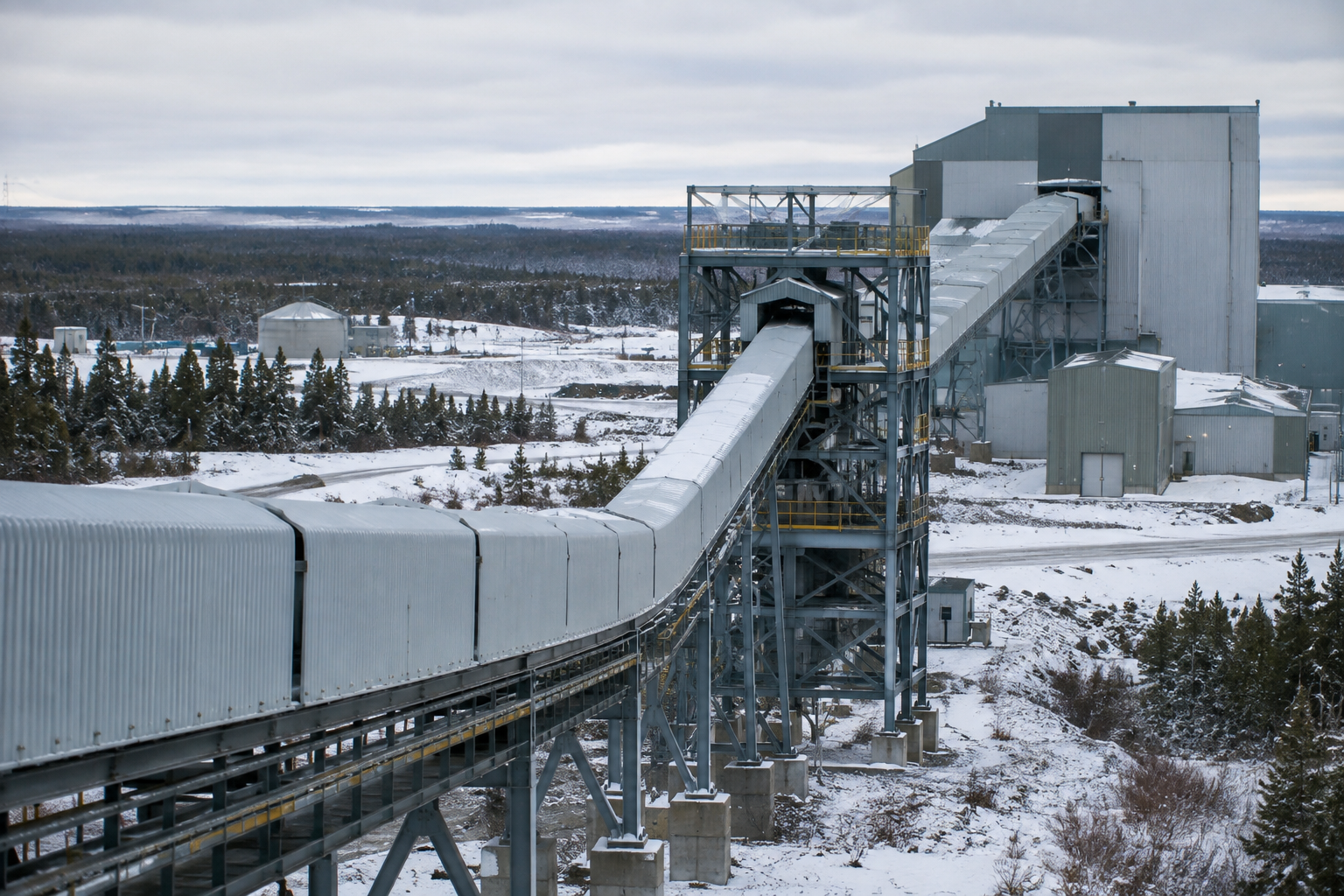
Cameco ($CCO) sits at the intersection of two powerful investment narratives: renewed nuclear-power demand and the search for secure North American critical-minerals supply. Its Saskatchewan operating base gives investors direct exposure to uranium production at a time when nuclear energy is regaining attention across the North American energy market.
That positioning makes Cameco more than another mining company. As the largest pure-play uranium producer on North American exchanges, the company may serve as a bellwether for uranium-equity sentiment—even when the long-term nuclear-demand outlook and near-term stock-market performance move in different directions.
A concentrated Saskatchewan operating base
Cameco’s strategic importance starts with its principal uranium assets: the McArthur River mine, the Key Lake mill and the Cigar Lake mine. All three are located in Saskatchewan and are described as among the highest-grade uranium operations globally.
The concentration matters for investors tracking North American energy security. Rather than relying on a broad portfolio of unrelated commodities, Cameco’s identity is closely tied to uranium production and the infrastructure supporting it. McArthur River and Cigar Lake provide the mining base, while Key Lake serves as a central milling asset within that Saskatchewan operating platform.
This gives $CCO a clear role in the market’s nuclear narrative. When investors focus on uranium supply, nuclear generation and energy-transition infrastructure, Cameco is one of the most direct North American-listed companies through which that sentiment is expressed.
Why the nuclear revival matters to uranium equities
The nuclear-power revival is fundamentally a demand narrative. Renewed investment in nuclear generation is driving expectations for accelerating uranium demand, creating a broader case for attention on producers with established operating assets.
For US and Canadian energy investors, the theme extends beyond electricity generation. Nuclear power is linked to energy-transition investment and to the development of North American critical-minerals supply chains. That connection may increase the strategic relevance of uranium producers capable of supplying the nuclear fuel market from established regional operations.
Still, a stronger demand narrative does not automatically translate into immediate price gains for uranium equities. Expectations about future nuclear investment can build well before market performance reflects them. Cameco’s role as a pure-play producer means the stock may respond sharply to changes in uranium sentiment, whether those changes are driven by stronger demand expectations, supply concerns or a broader shift in mining-sector risk appetite.
The bellwether question
Cameco’s scale and operating focus help explain why it is viewed as a bellwether. The company combines three named Saskatchewan assets with a business profile centered on uranium rather than a diversified basket of metals. That combination can make $CCO a reference point for investors assessing the health of the North American uranium market.
However, bellwether status cuts both ways. If enthusiasm for nuclear power strengthens, Cameco may attract increased attention as a direct expression of the theme. If the broader mining sector sells off, the company may still face near-term pressure even if long-term nuclear-demand expectations remain constructive.
Risks investors should monitor
- Demand-to-performance gap: Long-term expectations for nuclear-power growth may not produce immediate uranium-equity gains.
- Sector-wide selling: A broader mining-sector selloff could weigh on Cameco independently of the nuclear-demand narrative.
- Concentration of exposure: Because the company is the largest pure-play uranium producer on North American exchanges, changes in uranium sentiment may have an outsized effect on its market profile.
- Execution sensitivity: Investors may continue to watch the performance of the McArthur River mine, Key Lake mill and Cigar Lake mine as the core of Cameco’s Saskatchewan platform.
The central argument for Cameco is therefore structural rather than predictive. Its Saskatchewan assets, high-grade operating base and pure-play status place $CCO at the center of North American uranium sentiment. The key question is whether renewed nuclear investment can translate from a compelling long-term demand narrative into sustained market support, particularly during periods of weakness across mining equities. The company’s positioning is discussed in further detail by Kalkine’s analysis of Cameco and the global nuclear-power revival.
Bull/Bear Verdict
Bull Case: Cameco may remain a leading North American uranium bellwether because its McArthur River mine, Key Lake mill and Cigar Lake mine are all located in Saskatchewan and are described as among the highest-grade uranium operations globally, while renewed nuclear investment could support accelerating demand expectations.
Bear Case: The nuclear-demand narrative may not translate into near-term equity gains, and $CCO could remain vulnerable if a broader mining-sector selloff overwhelms positive expectations for long-term uranium demand.