Canada’s oil sands consolidation story just moved from theory to a $5.7 billion test of shareholder value. Cenovus Energy Inc. has entered a definitive arrangement agreement to acquire Athabasca Oil Corporation in a cash-and-stock transaction, creating one of the most consequential Canadian energy deals reported in this news cycle.
For holders of $CVE and $ATH, the headline is only the opening bid. The market’s real questions will center on valuation, the consideration paid to Athabasca shareholders, and whether the transaction ultimately creates accretion for Cenovus or introduces meaningful dilution. Those questions will determine whether this is disciplined consolidation or simply a larger corporate footprint.
A $5.7 billion statement of intent
The proposed transaction carries an implied enterprise value of $5.7 billion, according to the supplied Seeking Alpha headline. That figure gives investors an immediate framework for judging the deal’s scale, even though the supplied material does not include the detailed exchange ratio, cash component, financing structure or other definitive terms needed for a full valuation model.
The agreement was confirmed through separate releases from both companies. Cenovus announced the agreement to acquire Athabasca, while Athabasca announced that it had agreed to be acquired by Cenovus. That dual confirmation matters: this is not market speculation or an early-stage expression of interest. It is a definitive arrangement agreement, subject to the process and conditions outlined in the companies’ transaction materials.
What $CVE shareholders will watch
Cenovus shareholders are likely to focus first on the balance between strategic scale and share issuance. Because the consideration includes stock as well as cash, the transaction may affect the ownership economics of existing $CVE holders. The central test is whether the assets and operations brought into Cenovus can support accretion over time, or whether the stock component creates dilution before any potential operating benefits emerge.
That distinction cannot be resolved from the announced enterprise value alone. Investors will need the final transaction terms and additional financial disclosures to assess the implied purchase valuation, the number of Cenovus shares issued, the cash funded at closing and the expected contribution from Athabasca. Until those details are available, the market may treat the deal as strategically significant but financially unfinished.
Why $ATH holders face a different calculation
Athabasca shareholders face a more direct valuation question: what exit premium, if any, is represented by the cash-and-stock consideration relative to the company’s unaffected trading value? The supplied material does not provide a premium percentage or detailed offer terms, so assigning a figure would go beyond the available record.
Still, the structure gives $ATH holders exposure to two forms of consideration rather than a purely cash exit. That may leave them weighing the certainty of the proposed transaction against continued participation in Cenovus through the stock component. The eventual market response will likely depend on whether shareholders view the implied $5.7 billion enterprise value as a compelling recognition of Athabasca’s assets and position in the oil sands.
A larger oil sands competitive map
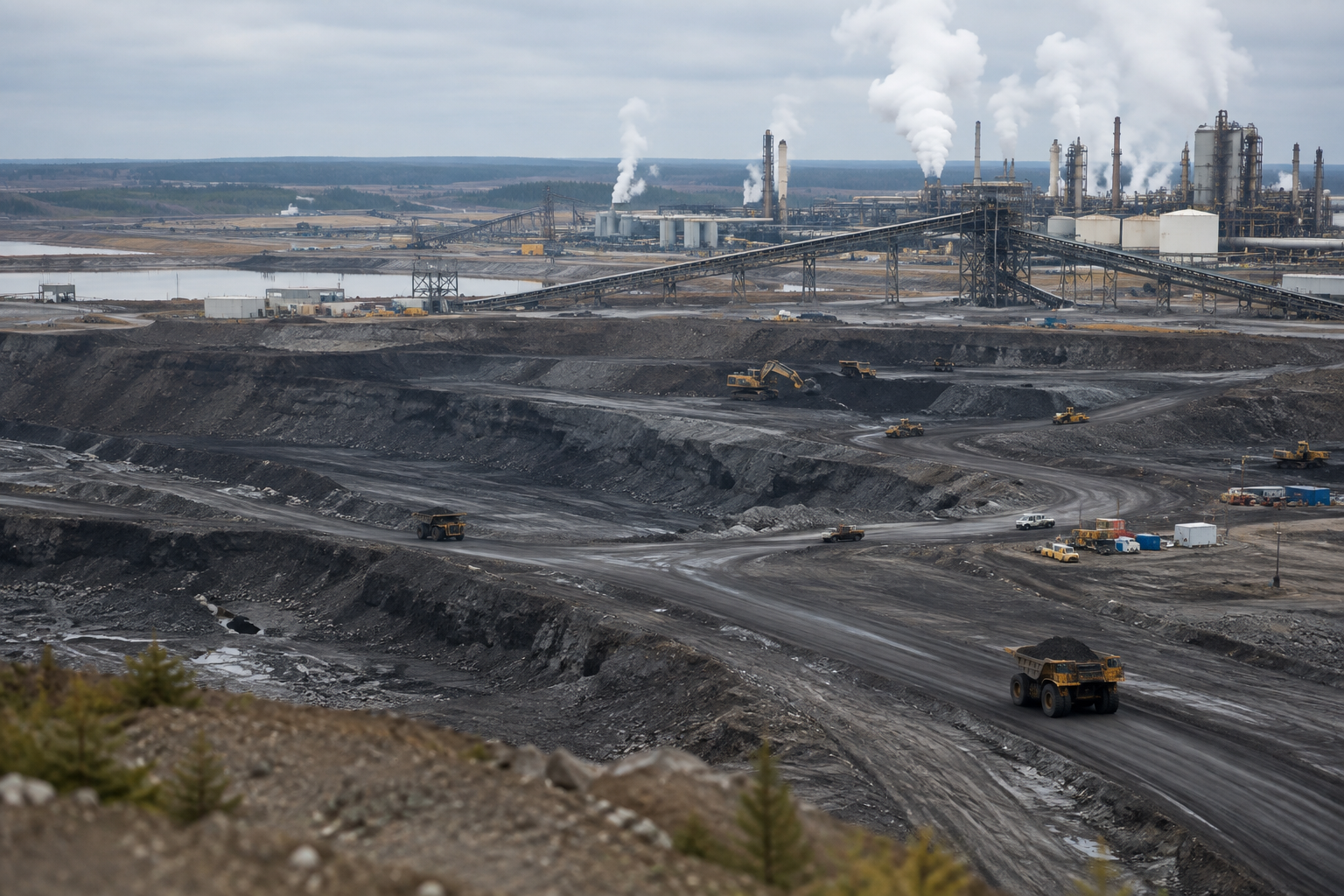
The strategic implication is straightforward: Cenovus would absorb a significant oil sands participant, potentially reshaping the competitive landscape for Alberta production. The combination may offer greater scale and a broader operating footprint, while also concentrating more oil sands exposure under one publicly traded Canadian energy company.
This is why the deal ranks among the largest Canadian oil sands consolidation moves reported in this news cycle. A $5.7 billion implied enterprise value is large enough to command sector-wide attention, particularly in a market where investors are watching for evidence that Canadian energy companies can deploy capital through corporate combinations rather than relying only on internal growth.
History suggests consolidation is rarely judged by announcement-day enthusiasm alone. The decisive evidence comes later, when management must demonstrate that the price paid, the financing mix and the integration plan justify the strategic ambition. For Cenovus, the acquisition may signal confidence in the long-term relevance of Canadian oil sands assets. For the broader market, it may signal that M&A appetite in Canadian energy remains active.
The M&A test begins now
The transaction places both tickers under a sharper analytical lens. $CVE shareholders may debate dilution versus potential accretion, while $ATH shareholders assess the value and structure of their proposed exit. Meanwhile, other Canadian energy companies may face renewed speculation about whether scale, asset quality and consolidation can attract similar strategic interest.
The bottom line: Cenovus and Athabasca have announced a major transaction, but the investment case is not settled by the headline. The $5.7 billion enterprise value establishes the scale of the bet. The detailed terms, shareholder votes and eventual financial performance will determine whether this becomes a model for Canadian oil sands consolidation or a warning about paying up for size.
Bull/Bear Verdict
Bull Case: The $5.7 billion transaction may strengthen Cenovus’s position in Alberta oil sands production and could support accretion if the acquired assets and operating scale outweigh the dilution associated with the stock component.
Bear Case: The cash-and-stock structure could dilute existing $CVE shareholders, while $ATH holders may question the exit value if the eventual terms do not provide a compelling premium; the supplied material does not yet resolve either issue.