
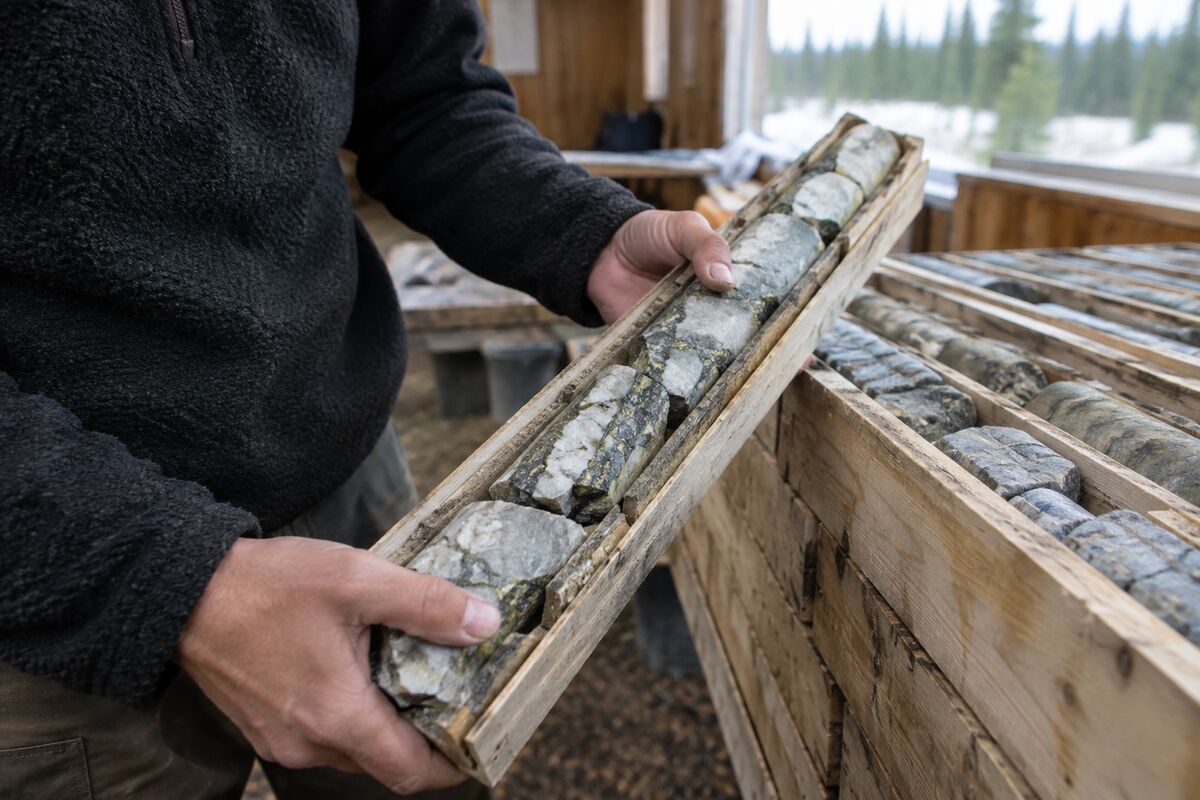
For junior miners, the road from geological ambition to fieldwork is paved with capital—and on Canada’s TSX Venture Exchange, that capital often arrives with a tax-oriented twist. Decade Resources Ltd. ($DEC; $DECXF) has announced a non-brokered flow-through private placement intended to raise $2.17 million, with the proceeds earmarked for qualifying Canadian exploration expenses.
The announcement puts a clear boundary around the financing: this is exploration money, not a stated production expansion or operating-budget boost. For investors watching the junior-mining sector, that distinction matters. The raise offers a glimpse into how companies such as $DEC seek funding when their primary near-term objective is to advance exploration rather than report an operating milestone.
What Decade’s financing is designed to do
Decade Resources says the gross proceeds will fund Canadian Exploration Expenses that qualify as flow-through mining expenditures. In practical terms, the financing structure is intended to direct capital toward eligible exploration activity in Canada, rather than leaving the use of proceeds broadly defined.
The company has described the placement as non-brokered, and the intended raise is $2.17 million. The available announcement does not disclose additional financing terms that would allow investors to assess the placement through details such as pricing, the number of securities, or a closing date. Those omissions are important: the headline figure describes the targeted gross proceeds, not a completed financing or a reported exploration result.
Decade’s announcement can be read in full through this company financing release.
Why flow-through financing matters in Canada
Flow-through financings are a distinctive tool in Canada’s junior-mining market. They can help exploration companies attract capital by linking an investment to eligible Canadian exploration spending and the associated tax treatment available under applicable rules. For investors, that may create tax-advantaged exposure to exploration spending, although the actual effect depends on individual circumstances and relevant tax requirements.
That structure can broaden the conversation beyond a company’s share price. A junior miner may have a compelling exploration plan but limited operating revenue, making access to conventional financing more difficult or potentially costly. A flow-through placement gives the company a way to frame its capital needs around qualifying work in Canada, while giving participating investors a reason to examine the financing through both market and tax lenses.
A measured signal for TSXV risk appetite
The proposed $2.17 million raise also says something about risk appetite in the TSXV mining ecosystem. Exploration-stage companies typically ask investors to fund geological work before any outcome is established. In Decade’s case, the stated purpose is exploration spending; the announcement does not claim a discovery, resource increase, production expansion, or other project result.
That leaves the financing as a capital-access story rather than a performance verdict. If completed as intended, the proceeds could support eligible Canadian exploration expenses. But the placement alone cannot establish whether exploration will produce a favorable result. For market watchers, the key signal is that Decade is seeking dedicated exploration capital—and that investors may still engage with the sector when financing structures align capital needs with Canada’s flow-through framework.
Bull/Bear Verdict
Bull Case: The intended $2.17 million raise could give Decade Resources dedicated funding for qualifying Canadian exploration expenses, while the flow-through structure may appeal to investors seeking tax-advantaged exposure to exploration spending.
Bear Case: The $2.17 million placement is intended for exploration rather than operations or a stated production expansion, and the announcement provides no project result; that leaves the outcome of the funded work uncertain.