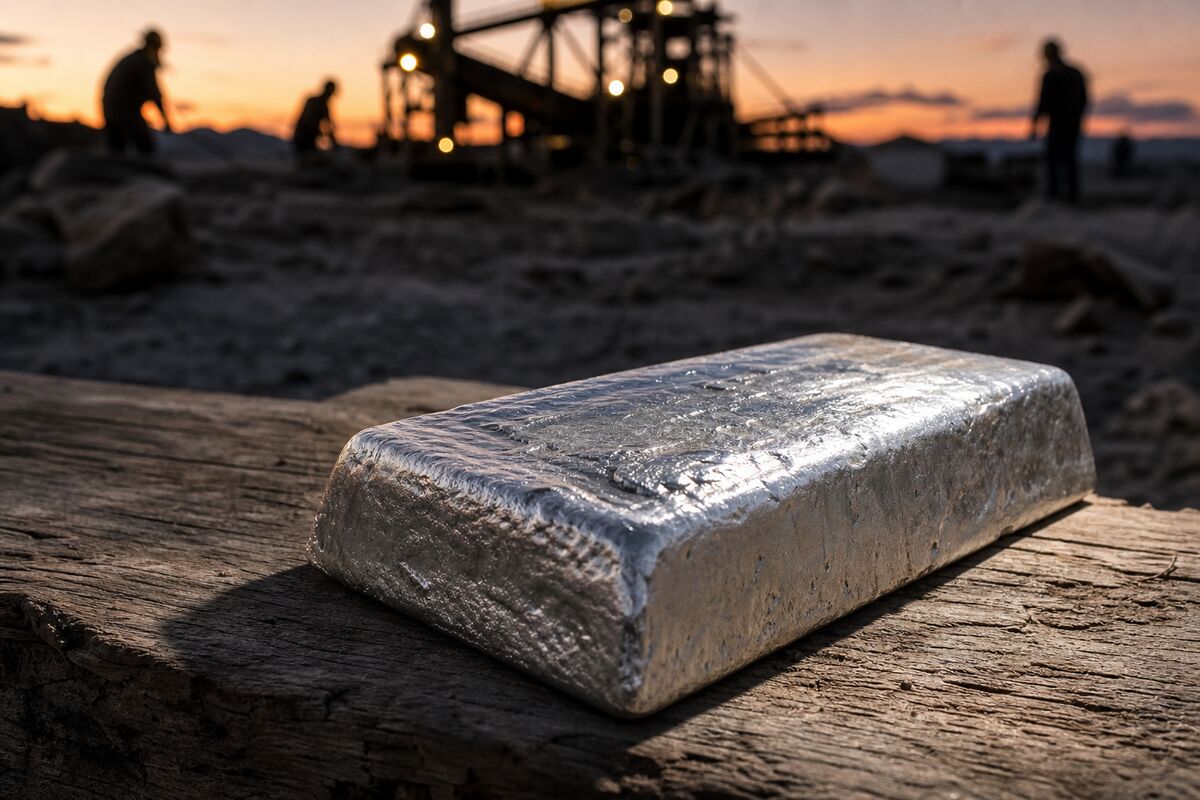
Precious-metals miners are being asked to run uphill as the metals beneath them lose altitude. Gold was trading at $3,466.4, down 2.68%, while silver stood at $38.71, down 5.08%—a sharp one-two punch that has left bullion near 15-month lows.
For investors watching TSX- and NYSE-listed mining shares, the message is less about one bad session than about financial endurance. When gold and silver retreat together, the miners with the strongest balance sheets may have more room to absorb the pressure, while more heavily exposed operators could feel every dollar of the decline.
The market’s behavior in Kinross Gold offers a useful snapshot of that tension. The company, which trades under $KGC, moved from a 4.9% loss to a 3.56% intraday decline. That improvement did not erase the selloff, but it did show how quickly sentiment can shift during a volatile session in the sector.
Kinross is not alone in the spotlight. Pan American Silver and Hecla Mining are also examples of companies whose fortunes are closely tied to the precious-metals cycle. The available performance data does not assign specific declines to either company, and that distinction matters. In a market this sensitive, broad sector weakness should not be casually converted into a company-by-company performance claim.
Why bullion weakness travels quickly
Mining equities are often treated as leveraged expressions of metal prices. That leverage can work in both directions. If bullion prices rise, revenue expectations may improve faster than the underlying commodity. When prices fall, however, the same operating structure can magnify concern about margins, cash generation and capital spending.
The current figures make the pressure visible. A 2.68% decline in gold and a 5.08% drop in silver are not abstract moves for producers. They can change the market’s assumptions about the value of future output, particularly when prices remain near 15-month lows. The longer that weakness persists, the more attention investors may give to the financial resources available between today’s prices and a potential recovery.
The balance-sheet dividing line
Balance-sheet strength is not a magic shield. It cannot prevent a miner’s share price from responding to weaker bullion, and it does not guarantee that a company will outperform its peers. It can, however, influence how much flexibility a company has while the commodity cycle is under strain.
For TSX and NYSE investors comparing Kinross Gold, Pan American Silver and Hecla Mining, the analytical checklist is straightforward. Debt levels and repayment schedules can indicate how much operating cash flow is already spoken for. Cash reserves and liquidity may show whether a company has room to manage an extended downturn. Capital-spending commitments can reveal whether management has flexibility—or whether projects and sustaining investment leave less room to adapt.
Investors may also distinguish between exposure to gold and exposure to silver, because the two metals are not moving in lockstep in this session. Silver’s 5.08% decline is steeper than gold’s 2.68% retreat, making the distinction particularly relevant when evaluating companies with different commodity mixes. Production costs, project timelines and the ability to moderate spending may matter just as much as headline production figures.
What the selloff is really testing
The question facing the group is not simply whether bullion can rebound from near 15-month lows. It is whether each miner can withstand a longer period of uncertainty without forcing difficult financial or operating decisions.
Kinross’s move from a 4.9% loss to a 3.56% intraday decline is a reminder that market pricing can change quickly. But the broader lesson is slower-moving: resilience is often measured not by avoiding volatility, but by maintaining options when volatility refuses to leave.
That makes the present selloff a balance-sheet test as much as a metals-price event. Pan American Silver and Hecla Mining remain relevant comparisons for investors assessing silver exposure, while Kinross provides the clearest named example of how a miner responded during the session. None should be reduced to a single day’s quote. The more durable distinction may emerge from liquidity, debt commitments and operating flexibility if bullion weakness continues.
For the full market context and the discussion of miners most exposed to the move, read the Investing.com analysis. The market is already delivering the warning; the balance sheets will determine how loudly it is heard.
Bull/Bear Verdict
Bull Case: If gold and silver recover from near 15-month lows, miners with stronger liquidity, manageable debt and flexible capital spending may have more room to participate in a rebound.
Bear Case: Gold at $3,466.4, down 2.68%, and silver at $38.71, down 5.08%, suggest that prolonged bullion weakness could intensify pressure on miners with less financial flexibility.