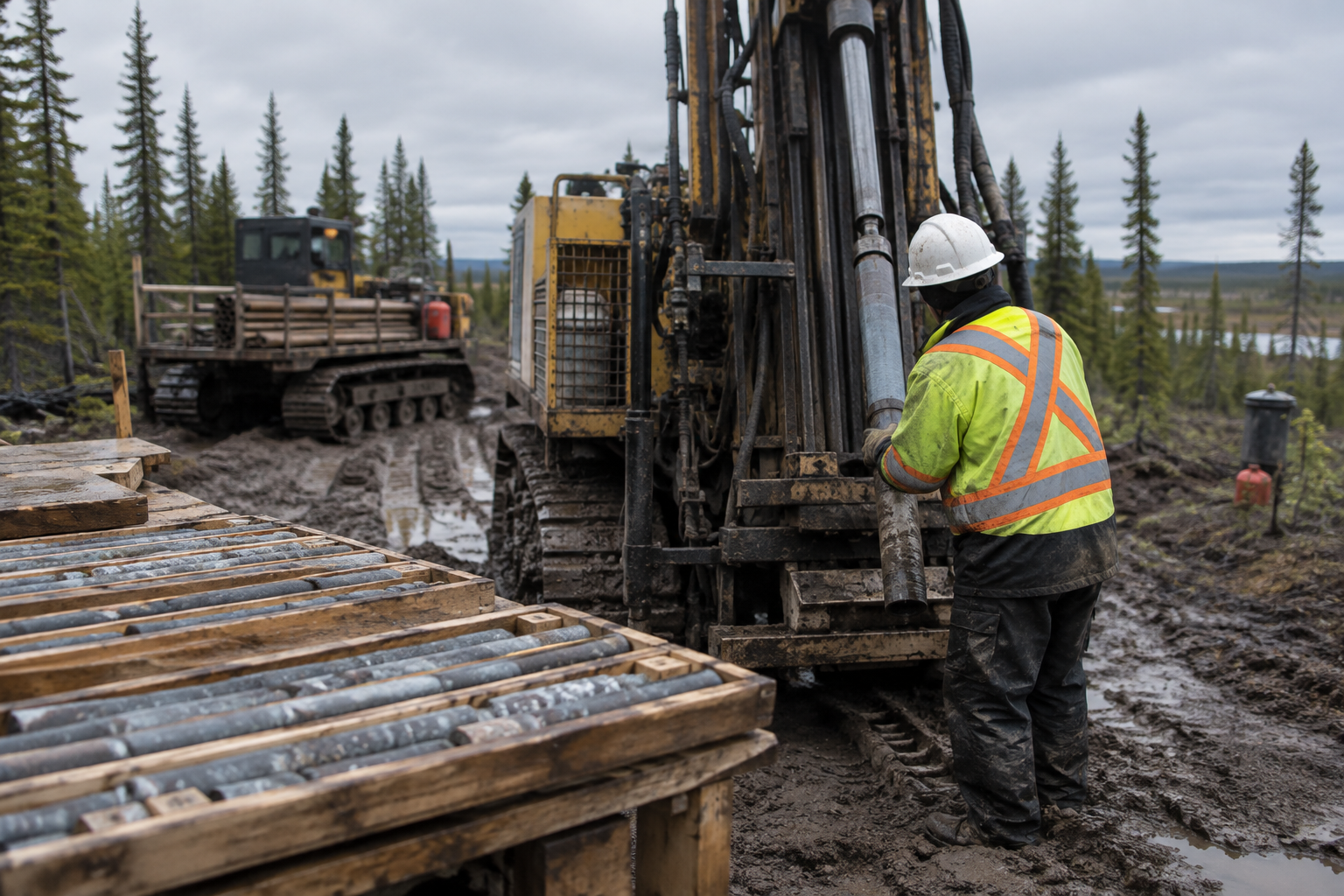
Greenridge Exploration’s completion of its 2026 summer exploration program at the Hook-Carter Uranium Project marks a meaningful project-development milestone for the Canadian uranium junior. The work was conducted in partnership with Denison Mines, placing an established uranium-sector participant alongside Greenridge as the company advances its exploration strategy in the southwestern Athabasca Basin.
The headline is important—but its limits matter just as much. Greenridge has confirmed that the summer program is complete; the update does not provide drilling success, uranium grades, resource growth, a discovery, or assay results. For investors tracking smaller Canadian uranium companies, that makes the announcement a progress update rather than a technical outcome.
Why the Athabasca setting matters
The Hook-Carter project is located in the southwestern Athabasca Basin, one of the world’s premier high-grade uranium exploration regions. That geological setting gives the project strategic relevance within the North American uranium narrative, even before investors have information on the program’s technical results.
Location alone does not establish economic value. However, operating in a globally recognized uranium district can provide a junior company with a clearer exploration identity and exposure to a specialized segment of the critical-minerals market. The completion of fieldwork therefore helps move Greenridge from planned activity to a completed exploration phase, while the next interpretation and reporting steps remain important.
Denison partnership adds context
The partnership with Denison Mines is the most consequential qualifier attached to the announcement. An established uranium producer and sector participant brings industry experience and provides additional context around the project and exploration approach. That association may influence investor perceptions of Greenridge’s technical strategy and the seriousness of its work at Hook-Carter.
Still, partnership should not be confused with proof of a discovery. It may support a perception of validation or potential de-risking at the project-development level, but it does not, by itself, establish uranium mineralization, a resource, or commercial viability. Those questions require technical evidence that has not been provided in this update.
What the milestone means for investors
Completion arrives as North American investors continue to follow uranium and nuclear-power demand themes. That backdrop may increase attention on smaller companies offering exploration exposure beyond larger-cap uranium names. Greenridge fits that profile as a Canadian uranium junior, with Hook-Carter providing a focused vehicle for investors monitoring early-stage opportunities in the Athabasca Basin.
The immediate investment signal is thus one of execution, not results. Greenridge completed the 2026 summer program, and Denison Mines was involved in the work. The market’s next assessment will likely depend on what the program generated and whether future technical disclosures provide evidence that advances the geological case.
For the full company announcement, read the Investing News Network report. Until additional data arrives, the disciplined conclusion is straightforward: Hook-Carter has reached a completed exploration milestone, but its ultimate uranium potential remains to be demonstrated.
Bull/Bear Verdict
Bull Case: Completion of the 2026 summer program in the Athabasca Basin, conducted in partnership with Denison Mines, may strengthen Greenridge’s project profile and appeal to investors seeking Canadian uranium-junior exposure.
Bear Case: The update provides no assay results, grades, discovery, or resource growth, so the project’s technical potential remains unconfirmed despite the Denison partnership.