Permitting is not discovery—but in the junior mining business, it can be the first hard evidence that an exploration program is moving from concept toward execution. VR Resources Ltd.’s submission of a Notice of Intent permit amendment for additional drill sites at its New Boston project in Nevada gives the market a tangible milestone to assess, even though no new mineralized intercept or assay result has been reported.
For holders and traders watching early-stage TSX Venture exploration companies, the significance is straightforward: a larger permitted footprint could give VR Resources more flexibility to test its molybdenum-tungsten-copper-silver porphyry target. That may sharpen market interest in $VRR.V, but the geological and economic questions remain unanswered until drilling produces results.
VR Resources is a Vancouver-based junior exploration company focused on evaluating and advancing mineral projects. Its New Boston asset is positioned around a polymetallic porphyry concept, with exposure to four commodities that carry distinct relevance in today’s US supply-chain conversation: molybdenum, tungsten, copper and silver.
Why the permit amendment matters
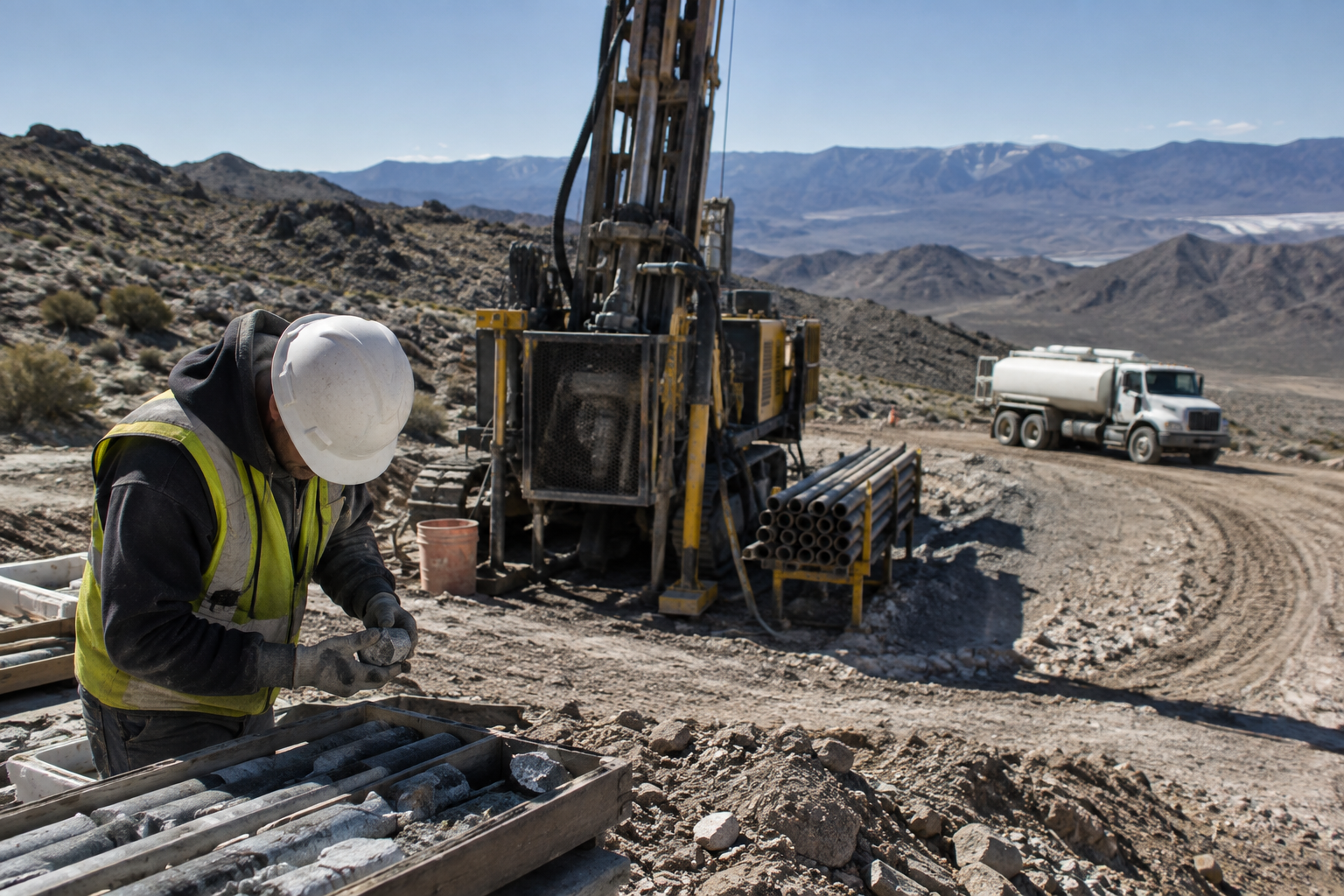
The company’s Notice of Intent permit amendment is designed to expand the number of drill sites at New Boston. That does not establish the presence of economic mineralization. It does, however, create additional opportunities to test the target and may indicate that VR Resources is preparing for a broader or more flexible exploration campaign.
That distinction matters. In speculative exploration, permitting is an operational milestone, not a substitute for drilling. The amendment could allow the company to investigate more of the porphyry system, refine geological interpretations or pursue targets that would not be accessible under the earlier plan. Whether those additional options translate into meaningful results will depend on future drilling, assays and the company’s ability to advance the project.
A strategic commodity mix
New Boston’s commodity profile gives the permitting update a wider policy backdrop. Copper remains central to electrification and industrial infrastructure discussions, while tungsten and molybdenum are important materials in industrial and strategic applications. Silver adds another potential revenue-bearing metal to the project’s exploration thesis.
That mix may appeal to market participants tracking US critical-minerals and supply-chain priorities. Nevada’s location could also make the project relevant to investors focused on domestic exploration themes. But thematic relevance is not the same as project validation. The market still needs evidence on grade, scale, continuity, metallurgy, infrastructure and economics—none of which is established by the permit amendment alone.
What investors should watch next
The next important developments would be confirmation of the amended permits, drill activity and the eventual release of assay results. Those steps should be evaluated separately. Expanded access may improve the company’s ability to test New Boston, while assays will determine whether the geological model is supported by material mineralization.
VR Resources has also indicated that equity grants tied to the company remain subject to TSX Venture Exchange approval. That administrative condition is another reminder that corporate milestones and exploration milestones should not be conflated. For $VRR.V, the permit amendment is a constructive step in the exploration process—but it remains a step before discovery, not proof of one.
Bull/Bear Verdict
Bull Case: The expanded drill-site plan may give VR Resources more flexibility to test its New Boston molybdenum-tungsten-copper-silver porphyry target and could increase attention around its US critical-minerals exposure.
Bear Case: The permit amendment does not confirm economic mineralization, and the project still requires future drilling and assay results to demonstrate whether the polymetallic target has meaningful scale or grade.