
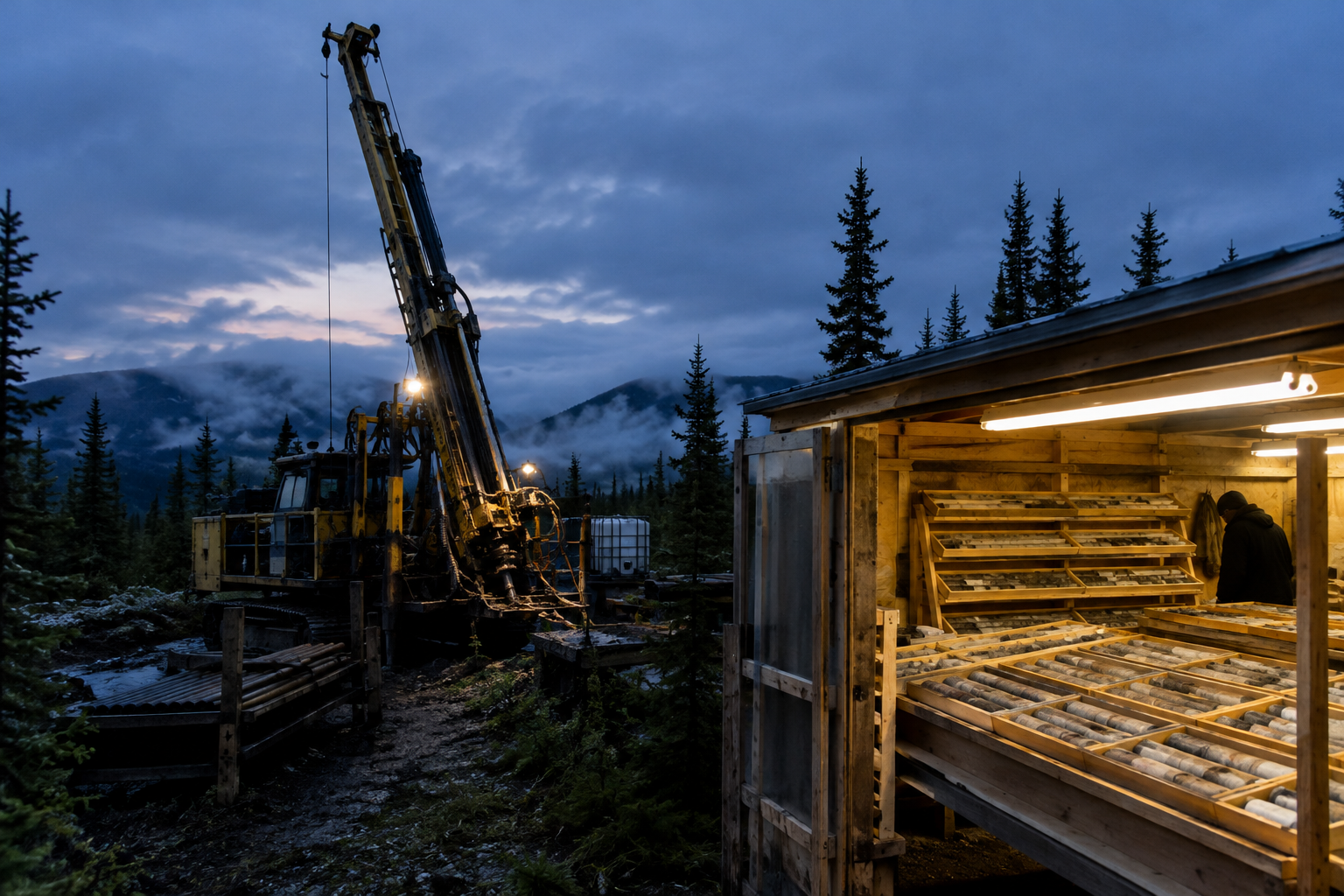
Canadian junior mining finance is showing a potentially important change in direction: capital is reaching exploration-stage companies again. Barksdale Resources’ ($BRO) first-tranche private placement generated C$13.2 million, while other financings identified in the current market context include Kirkland Lake Discoveries’ upsized $20 million placement and Getty Copper’s flow-through financing close.
That matters because equity-financing volume can act as an early signal for the mining cycle. It does not guarantee exploration success or a sustained recovery, but renewed access to capital may give junior companies the cash needed to advance projects after years in which major mining companies cut grassroots spending.
Barksdale’s C$13.2 Million Test Case
Barksdale’s transaction is the clearest central data point. The TSX Venture-listed company closed the first tranche of a private placement for gross proceeds of C$13.2 million and also completed a debt settlement. The financing details are documented in the company announcement available through Junior Mining Network.
For an exploration-stage issuer, a C$13.2 million first tranche represents meaningful access to equity capital. The debt settlement is also relevant: alongside the cash raise, it indicates that the company addressed a debt obligation as part of the transaction. However, the financing should not be read as a free benefit for existing shareholders. Issuing equity can dilute current ownership, and the eventual value of the capital depends on how effectively it supports exploration and project advancement.
A Broader TSX Venture Financing Signal
Barksdale’s raise is more informative when placed beside other transactions rather than viewed in isolation. Kirkland Lake Discoveries’ upsized $20 million placement, led by Eric Sprott, is a larger example of capital being committed to a Canadian junior. Getty Copper’s flow-through financing close provides another indication that exploration-focused funding remains available.
The pattern is significant because financing volume can precede changes in mining activity. An analysis from Ahead of the Herd describes junior equity-financing volumes as a reliable leading cyclical indicator for mining. The logic is straightforward: before a discovery can become a mine, a junior typically needs capital for fieldwork, drilling and other early-stage programs. When that capital becomes easier to access, exploration activity may expand before any production-level change appears in company financial statements.
Why the Cycle Matters for Exploration
For years, major mining companies reduced grassroots spending, leaving junior explorers to carry more of the early discovery burden. A renewed financing window could help replenish that pipeline. Capital may support work designed to test geological targets, improve project data and generate the discoveries that larger companies could later assess.
That potential creates a sharp divide between operating progress and market enthusiasm. A financing can provide resources, but it does not establish that a project will produce a discovery. The current evidence supports a more measured conclusion: access to equity capital appears to be improving across several Canadian junior examples, but the conversion of funding into exploration results remains uncertain.
Dilution Versus Discovery-Driven Upside
The investor calculation therefore has two sides. On one side, financings such as Barksdale’s C$13.2 million first tranche may extend a company’s ability to pursue exploration without relying solely on debt. Kirkland Lake Discoveries’ $20 million upsized placement and Getty Copper’s flow-through close reinforce the possibility of a broader financing thaw.
On the other side, new shares can dilute existing holders. The larger the capital raise, the more important the terms, use of proceeds and exploration results become. Financing activity is a leading indicator, not a guarantee of discovery-driven value.
Vizsla Silver is part of the relevant junior-mining financing context, but the available source material does not provide a specific transaction, amount or price for the company. It should therefore be viewed here as contextual rather than as another quantified case study.
The Data Hawk’s Read
The signal is constructive but incomplete. Three pieces of evidence stand out: Barksdale’s C$13.2 million first tranche, Kirkland Lake Discoveries’ $20 million upsized placement led by Eric Sprott, and Getty Copper’s flow-through financing close. Together, they suggest that Canadian exploration companies may be finding a more receptive equity market.
The next test is deployment. If financings translate into sustained exploration activity and credible discoveries, today’s capital flows could prove to be an early marker of a stronger Canadian mining cycle. If not, the raises may remain primarily a story about capital availability and shareholder dilution.
Bull/Bear Verdict
Bull Case: Barksdale’s C$13.2 million first tranche, Kirkland Lake Discoveries’ upsized $20 million placement and Getty Copper’s flow-through close may indicate that equity capital is returning to Canadian exploration, potentially supporting a new cycle of grassroots work.
Bear Case: The financings may dilute existing shareholders, and capital access alone does not establish exploration success; Barksdale’s first tranche and the broader raises still must translate into measurable project progress.