
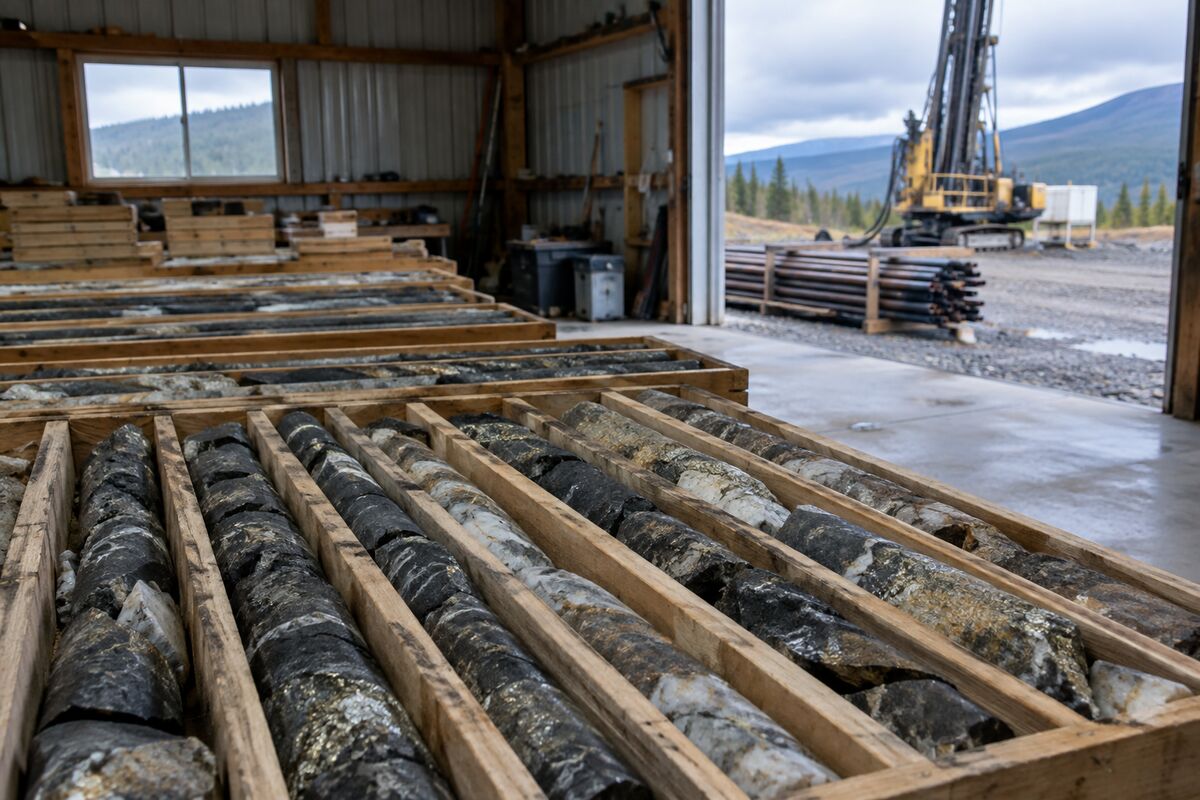
For resource investors, a drill program is where a geological story begins to move from map-room possibility toward field-tested evidence. Opawica Explorations Inc. has initiated a tender process for a planned 10,000-metre campaign at its Arrowhead copper-gold-zinc VMS project in Quebec’s Abitibi region.
The headline number is substantial enough to put Arrowhead on the radar of TSXV-focused exploration watchers. But there is an important distinction beneath the excitement: opening a tender process is a step toward drilling, not a discovery result. The rock still has to answer the questions the program is designed to ask.
A large campaign at a familiar Canadian exploration address
Arrowhead is described as a copper-gold-zinc volcanogenic massive sulfide, or VMS, project in the Abitibi. The region is one of Canada’s best-known exploration settings, and the combination of copper, gold and zinc gives the target exposure to three commodities that often sit near the center of base- and precious-metals discussions.
Opawica is a Canadian mineral exploration company focused on precious- and base-metal projects in North America. Its Arrowhead tender process therefore represents more than an administrative notice: it is a proposed field program intended to generate geological information at a project tied to a broad Canadian exploration narrative.
Why 10,000 metres matters to market watchers
For TSXV-focused resource investors, the scale of a drilling campaign can matter because it signals a serious effort to test a project across multiple targets or geological interpretations. A 10,000-metre program could produce a meaningful set of technical milestones for the market to follow, provided the process advances from tendering to execution.
That does not mean the program guarantees a discovery, resource growth or any particular market outcome. The tender process does not provide drill results, and the available information does not include financing terms, contractor selection, drilling dates or anticipated grades. Those omissions are not minor footnotes; they define what can and cannot be concluded at this stage.
The relevant update for Canadian-listed market observers is the change in activity around Arrowhead. The next markers to monitor are the outcome of the tender process, the selection of a drilling contractor, confirmation of the campaign’s timing and any subsequent technical disclosures. Each could help clarify how the company intends to test the copper-gold-zinc VMS target.
Attention first, evidence next
Exploration markets are fueled by anticipation, but geology ultimately sets the pace. Opawica’s proposed 10,000-metre program may increase attention around Arrowhead and contribute to the broader Abitibi exploration story. Still, the project remains at the stage where the planned work must be completed before its geological significance can be judged.
Investors seeking the original announcement can read the source report on Opawica’s Arrowhead tender process. For now, the story is about preparation: a sizeable proposed drilling campaign, a multi-commodity target and a series of milestones still ahead.
Bull/Bear Verdict
Bull Case: The planned 10,000-metre program could draw greater TSXV-focused attention to Arrowhead because it targets copper, gold and zinc in Quebec’s Abitibi region.
Bear Case: The tender process is not a discovery result, and key details—including contractor selection, timing and drill results—remain outstanding.