
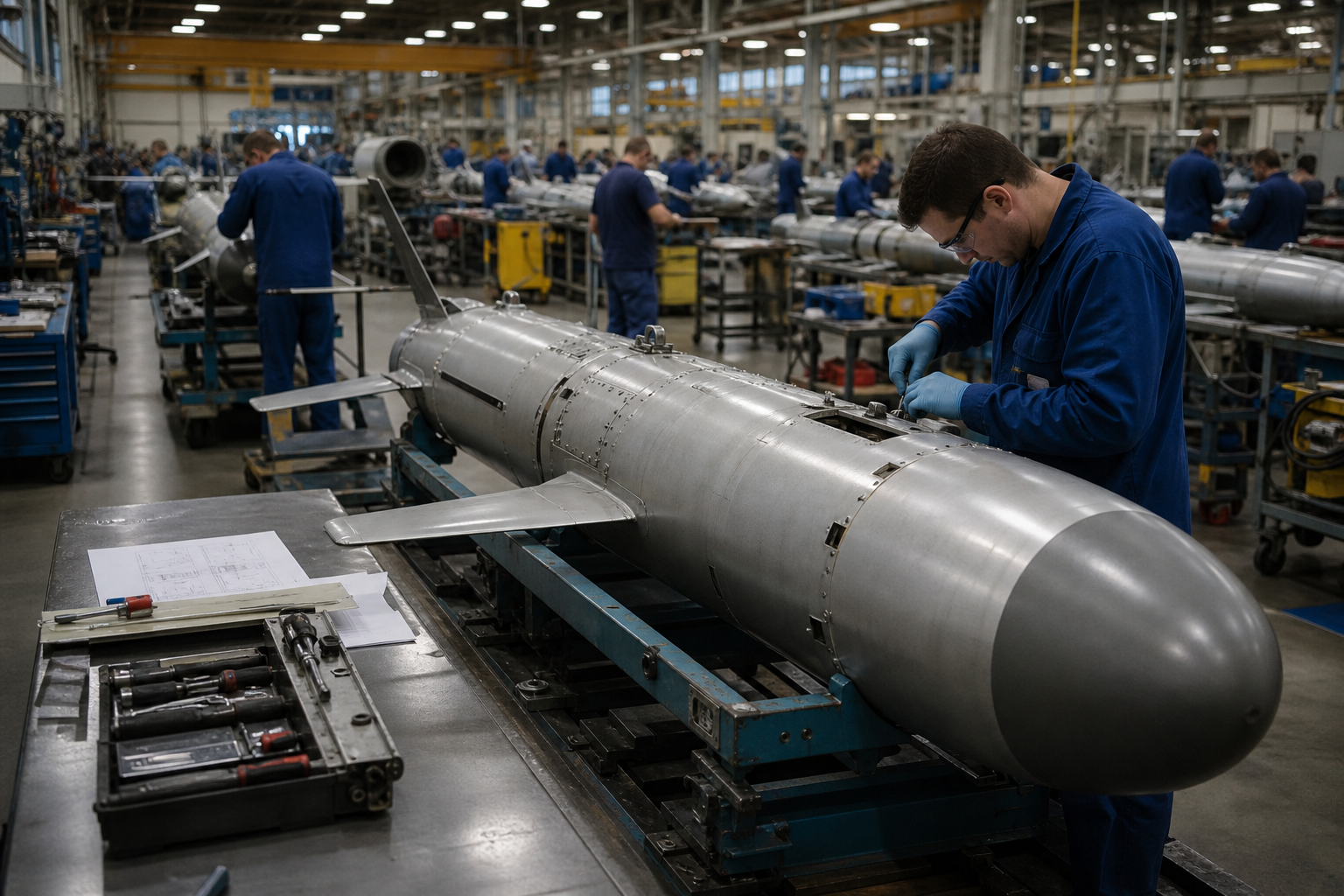
In an era where global defense dynamics are shifting, Raytheon's recent $22.9 billion contract for Tomahawk missile production is nothing short of a game changer. This seven-year deal underscores the growing urgency for nations to bolster their military capabilities amid escalating geopolitical tensions. Investors should pay close attention; this contract could signal a significant uptick in Raytheon's revenue streams and stock performance over the coming years.
The U.S. government's decision to award this substantial contract to Raytheon (RTX) comes at a time when defense spending is on the rise, driven by increased concerns over regional stability and security. With threats looming in critical areas such as the Strait of Hormuz, where Iran has recently escalated its rhetoric, the implications for defense contractors are profound. The current climate suggests that we are not merely witnessing a temporary spike in military procurement but rather a long-term strategic shift that could redefine the defense landscape.
The Contract's Significance
This $22.9 billion contract is pivotal not only for Raytheon but for the entire defense sector. It represents a commitment by the U.S. to enhance its military readiness and capabilities, particularly in the realm of precision-guided munitions. The Tomahawk missile has proven itself as a critical asset in modern warfare, and the demand for such systems is likely to grow as various geopolitical actors continue to flex their military muscles.
Raytheon's ability to ramp up production of the Tomahawk missile aligns perfectly with the U.S. defense strategy, which increasingly prioritizes deterrence and rapid response. For investors, this contract is a clear indication that Raytheon's role in national security will only expand, potentially translating into robust revenue growth and increased shareholder value.
Financial Implications
From a financial perspective, the implications of this contract for Raytheon are multifaceted. First, the deal is expected to provide a steady revenue stream over its seven-year lifespan, allowing the company to plan its operational and financial strategies with greater confidence. Furthermore, this influx of capital could lead to increased investments in research and development, enabling Raytheon to innovate and maintain its competitive edge in the defense sector.
Moreover, as defense budgets are likely to remain elevated in response to ongoing geopolitical tensions, Raytheon stands to benefit from a favorable market environment. Analysts may interpret this contract as a signal of sustained demand for defense products, which could bolster investor sentiment and drive stock performance. Historically, defense contractors have thrived during periods of heightened military spending, and Raytheon appears well-positioned to capitalize on this trend.
Conclusion
The $22.9 billion contract awarded to Raytheon for Tomahawk missile production is not just a financial win for the company; it is a reflection of the broader defense landscape that is evolving in response to global threats. Investors should consider the long-term implications of this deal, as it may signify a sustained rise in defense spending and an opportunity for Raytheon to solidify its market position.
In summary, as geopolitical tensions remain a constant backdrop, the defense sector is poised for growth, and Raytheon is at the forefront of this transformation. The strategic importance of this contract cannot be overstated, and investors would do well to keep a close watch on developments in this arena.
SourceBull/Bear Verdict
Bull Case: The $22.9 billion contract positions Raytheon for strong revenue growth, indicating a favorable outlook as defense spending increases.
Bear Case: Escalating geopolitical tensions could lead to market volatility, potentially impacting Raytheon's stock performance despite the contract.