
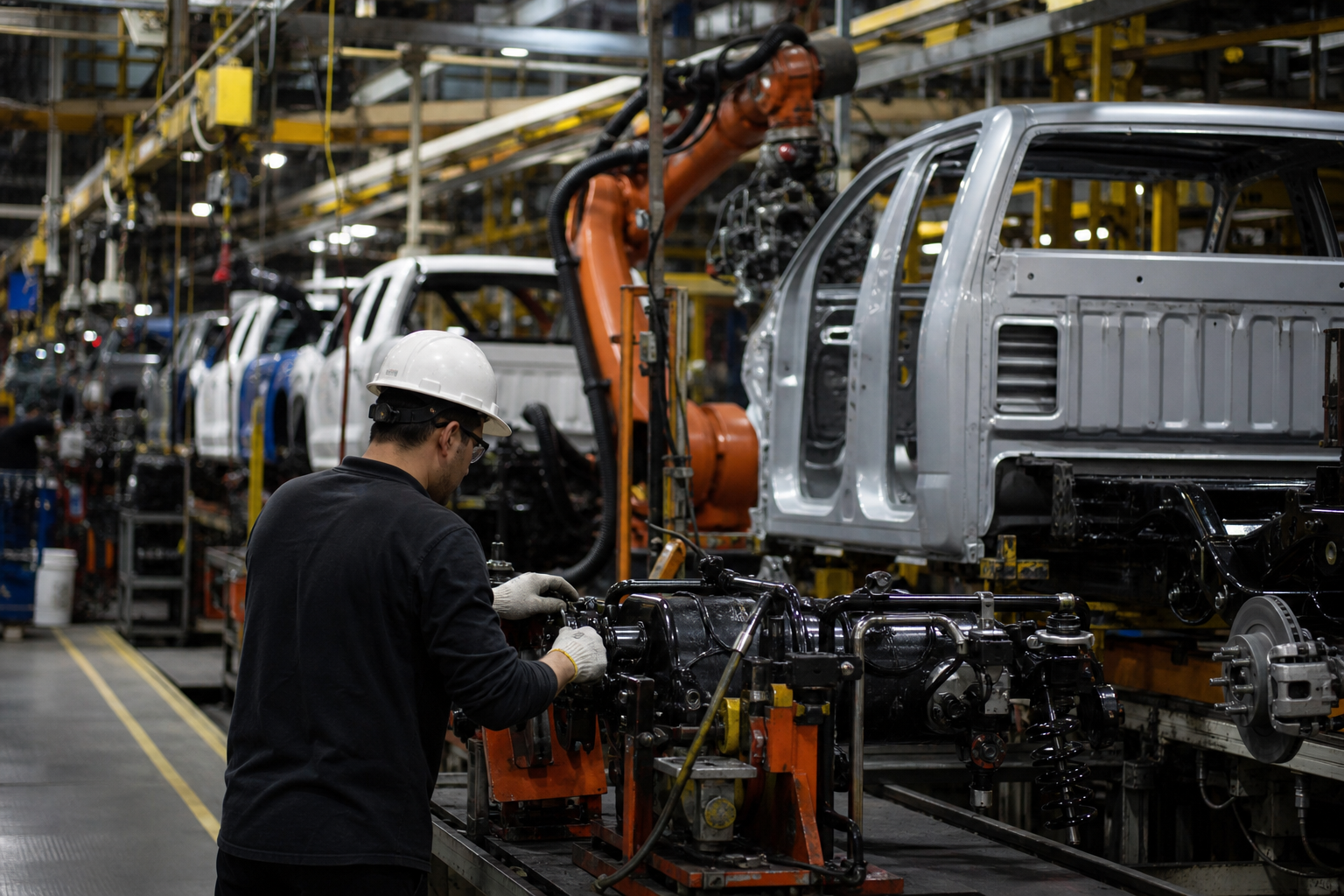
In a bold move that could reshape the North American automotive landscape, President Donald Trump announced a staggering 50% tariff on imports of cars, trucks, and auto parts from Canada, effective January 1, 2027. This sweeping policy shift is poised to alter not only the dynamics of Canadian auto manufacturing but also the profit margins of major U.S. automakers.
The implications of these tariffs are profound. For Canadian manufacturers, the tariffs could lead to increased production costs and potential supply chain disruptions. Companies listed on the Toronto Stock Exchange (TSX), such as $GM, $F, and $STLA, face a critical juncture as they prepare for the economic fallout of this policy change.
Impact on Canadian Manufacturing
The auto industry is a significant pillar of the Canadian economy, contributing approximately 10% of the country’s total manufacturing output. With the new tariffs, manufacturers will likely experience:
- Increased Costs: A 50% tariff could inflate the cost of imported parts, squeezing profit margins.
- Production Adjustments: Manufacturers may need to rethink their sourcing strategies and production locations to mitigate costs.
- Market Competitiveness: Canadian manufacturers might struggle to compete against U.S.-based counterparts who are less affected by tariffs.
Repercussions for U.S. Automakers
U.S. automakers, including $GM, $F, and $STLA, could also see their profit margins shrink as they face higher costs for Canadian imports. The auto industry is already grappling with a range of challenges, including supply chain issues and rising raw material prices. The additional burden of these tariffs may exacerbate these challenges:
- Margin Pressure: Companies may have to pass on costs to consumers, potentially reducing demand.
- Strategic Relocations: Automakers could consider relocating production facilities to avoid tariffs altogether, impacting jobs in both the U.S. and Canada.
- Stock Market Reactions: According to recent data, the S&P 500 and Nasdaq indices slipped amid rising geopolitical tensions, which included this tariff announcement.
Market Reactions and Future Outlook
The immediate reaction in the stock market has been caution. The S&P 500 and Nasdaq indices have shown declines, reflecting investor unease about the implications of these tariffs. As the market digests this information, we might expect increased volatility in the auto sector, particularly among those companies most affected by the tariff:
- $GM: Historically sensitive to production costs, a decline in stock price could be anticipated.
- $F: With a significant reliance on Canadian imports, Ford must strategize to cushion the impact.
- $STLA: Stellantis could see shifts in its operational strategy as it navigates the new tariff landscape.
In conclusion, the impending 50% tariffs on Canadian auto imports represent a seismic shift for both Canadian and U.S. auto markets. Investors and industry stakeholders will be closely monitoring how these tariffs affect production costs, consumer prices, and overall market dynamics. The coming months will be crucial as companies adjust their strategies and the broader market reacts to these significant changes. For more detailed analysis, check out the full report on this developing situation here.