
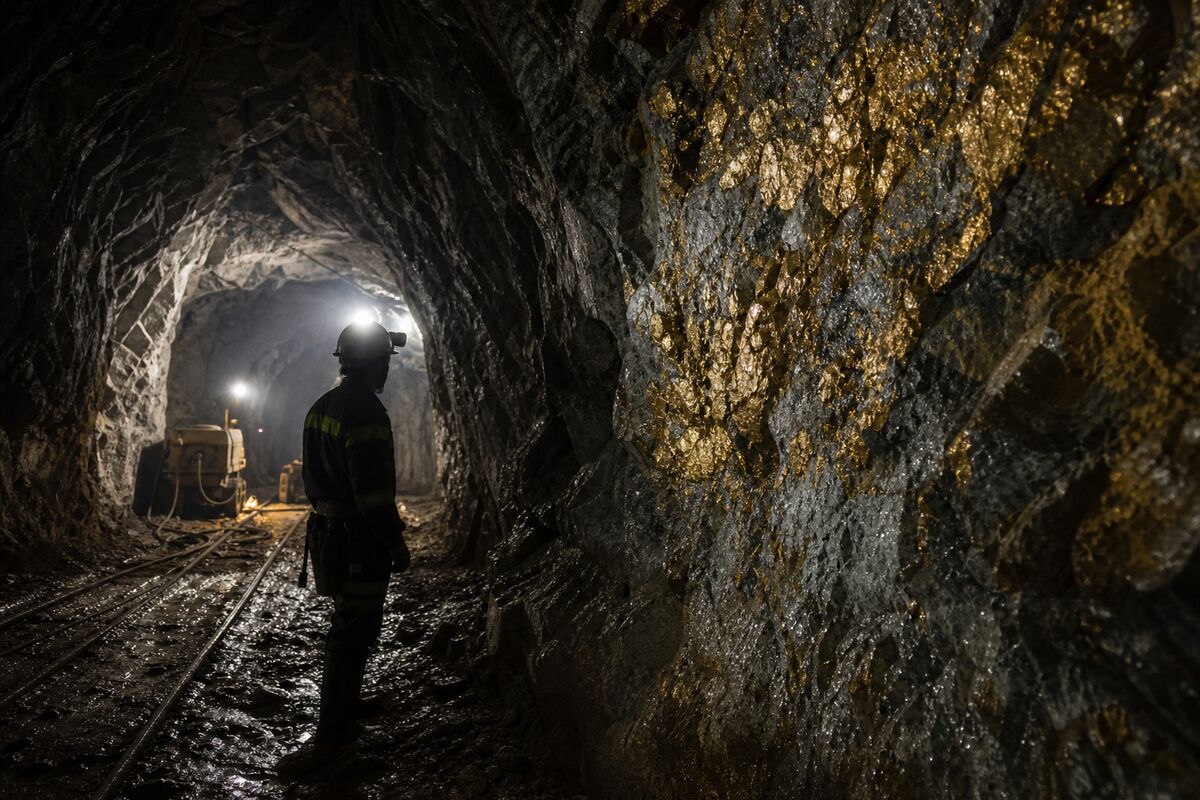
The latest move in Wesdome Gold Mines is a reminder that gold-stock investors are rarely judging a single trading session in isolation. Behind the attention on $WDO (TSX:WDO) are two producing assets—Eagle River and Kiena—along with a profitability profile that may matter as investors compare Canadian mid-cap gold producers.
There is no need to force a simplistic explanation onto the stock’s latest Toronto Stock Exchange move. The more useful question is what the market is weighing: operating exposure at Eagle River and Kiena, reported earnings power, and the broader mood toward Canadian gold equities while bullion prices remain volatile. The latest analysis of Wesdome’s share-price move provides the starting point for that discussion.
Profitability gives the stock a foundation
Wesdome reported net income of CA$419.96 million and revenue of CA$1.11 billion. Those figures are central to how investors may frame the company’s valuation and operating profile. Revenue indicates the scale of the business, while net income provides an important lens on whether that scale is translating into reported profitability.
For investors comparing mid-cap TSX gold miners, profitability can separate a producer with meaningful earnings capacity from one whose appeal rests primarily on future operating improvements or higher bullion prices. That distinction may become more important when sentiment shifts quickly. A company with reported net income and more than CA$1 billion in revenue may command a different discussion from a smaller producer still defined mainly by development expectations.
That does not make the reported figures a complete investment case. Net income and revenue do not, by themselves, answer every question about mine performance, costs, production consistency or future capital requirements. They do, however, give investors specific data points with which to assess the business rather than relying solely on the daily movement in $WDO.
Eagle River and Kiena remain the operating focus
Wesdome is a Canadian gold producer operating the Eagle River and Kiena mines. Those operations are therefore more than corporate talking points: they are the assets investors must ultimately connect to the company’s financial results and longer-term outlook.
Eagle River and Kiena also give the stock an operating narrative that can influence sentiment toward the shares. Investors may assess how the two mines support revenue generation and profitability, while also considering whether the combined asset base strengthens Wesdome’s position among Canadian gold producers. The significance of the mines lies in their role within the company’s overall production and earnings framework—not in any unsupported claim that either operation caused the latest share-price move.
Gold sentiment can amplify the reaction
Gold equities often trade at the intersection of company-specific execution and the direction of bullion prices. When gold prices are volatile, investor attention may swing between operating fundamentals and changing expectations for the commodity. That can make sentiment toward Canadian gold producers more influential, particularly for mid-cap names such as Wesdome.
The result is a stock that may be judged on two levels. First, investors can examine the company’s reported CA$419.96 million in net income and CA$1.11 billion in revenue. Second, they can consider how Eagle River and Kiena fit into the market’s broader view of Canadian gold equities. The latest TSX move should be read in that context, without attributing a specific cause that has not been provided.
The bottom line is straightforward: Wesdome’s investment narrative rests on identifiable producing assets, reported profitability and exposure to a gold market where sentiment can change quickly. That combination may support continued investor interest, but it also leaves the shares sensitive to how the market evaluates operating performance and bullion-price volatility.
Bull/Bear Verdict
Bull Case: Wesdome’s Eagle River and Kiena mines, combined with reported net income of CA$419.96 million and revenue of CA$1.11 billion, may give investors a stronger profitability framework when comparing Canadian mid-cap gold producers.
Bear Case: Volatile bullion prices and changing sentiment toward Canadian gold equities could pressure the shares, while revenue and net income alone may not resolve questions about mine-level performance or future operating requirements.