
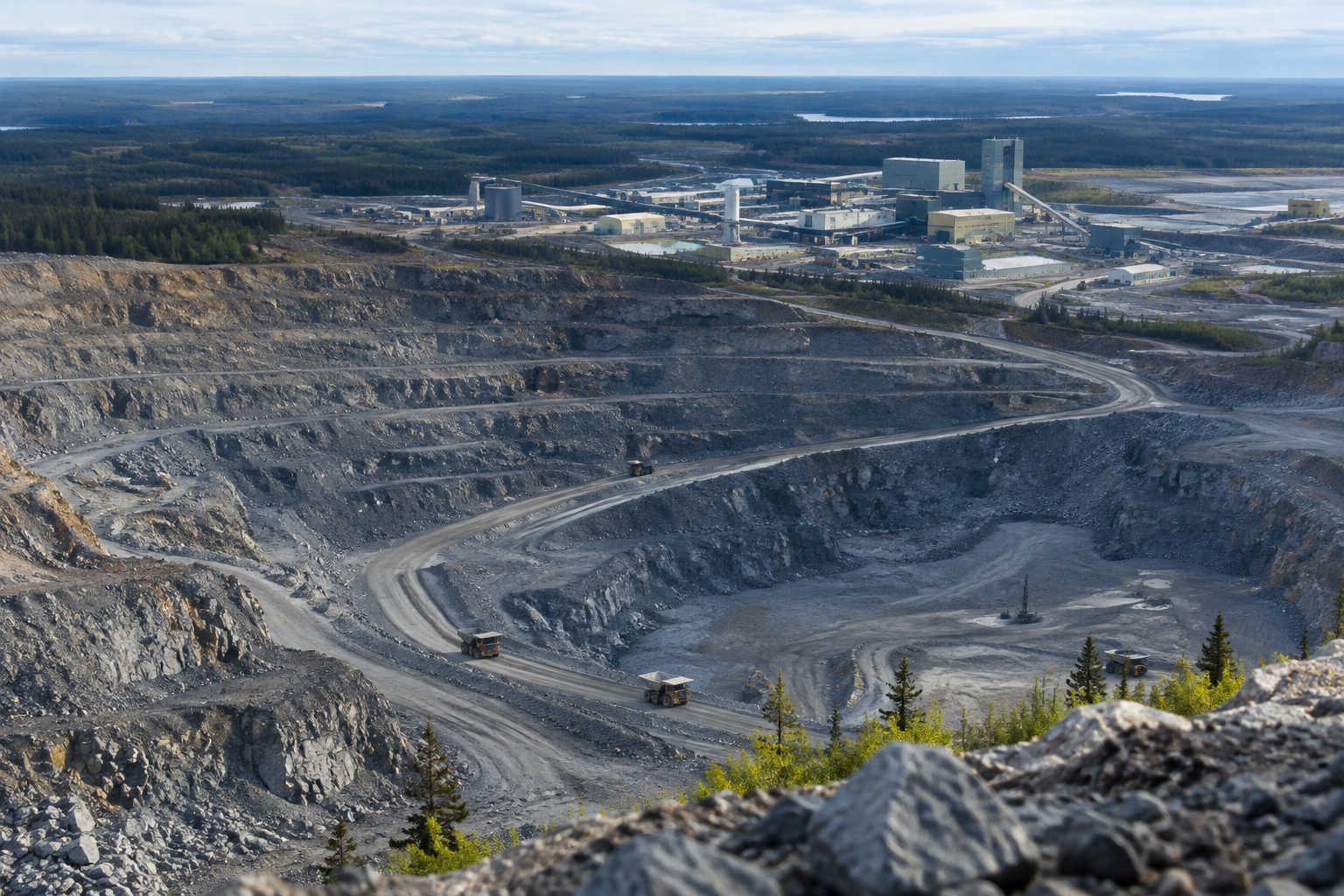
In gold mining, scale is more than a grand number on a company presentation. It is the machinery that can help a producer absorb volatility, spread operating demands across major assets and keep margins in focus when the market’s mood turns restless. Agnico Eagle Mines, trading as $AEM in the United States, offers a useful case study.
A Simply Wall St analysis identified Agnico Eagle among gold stocks with margins above 38%. That figure does not provide a complete picture of the company’s future performance, but it does place a spotlight on the operating resilience investors may seek when assessing large Canadian gold producers.
Scale with several heavyweights
Agnico Eagle’s profile is anchored by a group of major revenue-generating mines. Detour Lake is estimated at approximately US$3.2 billion, making it the largest of the three assets highlighted in the assignment. Canadian Malartic follows at approximately US$2.5 billion, while Meadowbank is estimated at approximately US$2.0 billion.
Those figures frame Agnico Eagle as a substantial operator rather than a single-asset story. The distinction matters. A company associated with several large mines may have a broader operating base to evaluate, giving investors more than one production engine to watch as they follow the Canadian mining sector.
Still, scale should not be confused with certainty. Large mines bring substantial operating complexity, and revenue estimates alone do not describe every cost, timing issue or challenge that can influence results. The more defensible point is narrower: Agnico Eagle’s combination of major assets and margins above 38% makes it a notable reference point for discussions about mining economics.
Why margin resilience matters
Margins are the financial cushion between revenue and the costs required to generate it. For investors studying gold miners, that cushion can be as important as headline production. A producer with stronger margins may have more room to manage changing conditions, although the size and durability of that room can shift with operating performance and market conditions.
That is why Agnico Eagle’s margin profile may carry significance beyond the company itself. As a large-scale Canadian gold producer, it can serve as a potential bellwether for how investors think about sector quality. If a major operator can maintain margins above the threshold highlighted by Simply Wall St, attention may turn to whether other producers can demonstrate comparable resilience. The comparison, however, would require company-specific data that is not included here.
The backdrop remains unsettled. Gold-price volatility can change the conversation quickly, making live market information and mining-news flow part of the daily analytical routine. Kitco remains a destination for monitoring live gold prices and related mining news, rather than a substitute for examining an individual company’s assets and margins.
The investor lens
For investors focused on Canadian gold mining, Agnico Eagle’s story is therefore less about a single eye-catching percentage than about the relationship between margin resilience and operating scale. Detour Lake, Canadian Malartic and Meadowbank give the company a portfolio built around sizable revenue-generating mines, while the margin figure offers a snapshot of why that scale attracts attention.
The central question is whether the company’s operating profile can remain resilient as conditions evolve. The available data identifies a strong starting point: margins above 38% and major mines estimated at approximately US$3.2 billion, US$2.5 billion and US$2.0 billion, respectively. What comes next will depend on future operating results and the broader gold-market environment—both of which warrant continued monitoring.
Bull/Bear Verdict
Bull Case: Agnico Eagle’s margins above 38%, alongside major revenue-generating mines including Detour Lake at approximately US$3.2 billion, may signal meaningful operating resilience and scale.
Bear Case: The margin figure and mine estimates do not establish future performance; gold-price volatility and the complexity of operating several large assets could challenge that resilience.