
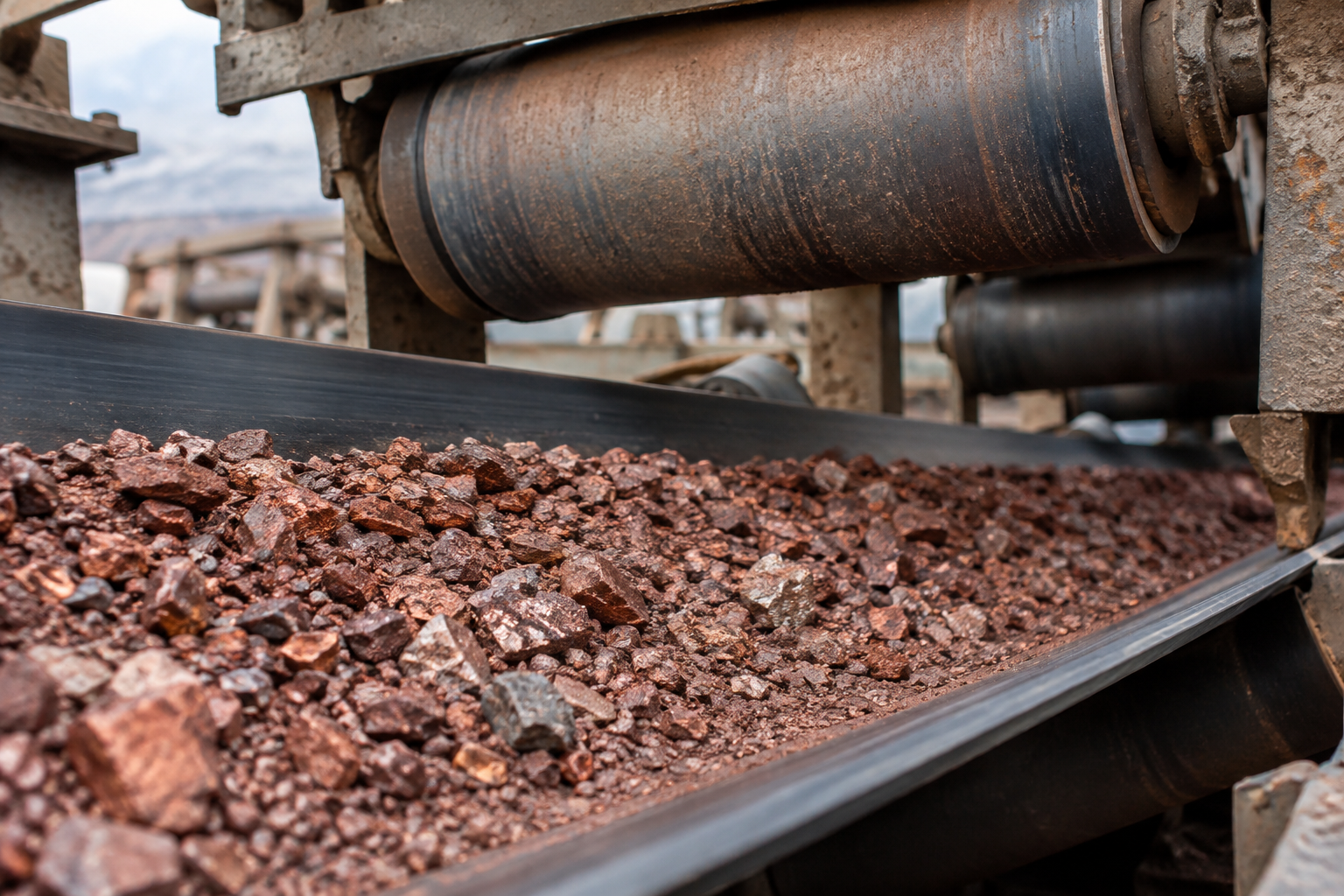
Copper’s next move may be dictated less by headline demand forecasts than by what is physically available right now. The LME copper cash contract traded at an approximately $97-$98 per tonne premium to the three-month contract, a market signal that near-term supply is tightening.
That premium arrives alongside a sharp drawdown in exchange-held metal and fresh labor disruption at a major mine. For traders and investors tracking Southern Copper Corporation ($SCCO), Antofagasta and other copper miners, the message is clear: the supply side is becoming harder to dismiss.
A market paying up for immediate copper
The LME cash-versus-three-month spread is not a forecast by itself, but the roughly $97-$98 per tonne premium indicates that buyers place greater value on prompt delivery than on metal arriving later. In a market already dealing with declining visible inventories, that structure can focus attention on mine output, smelter availability and labor negotiations.
Market data cited by Crux Investor show exchange-held copper stocks have fallen 41% since April. That is a substantial change in readily visible supply, even if it does not establish how long the drawdown can continue or where prices go next. The more important point for the mining sector is that inventory contraction makes operational interruptions more consequential.
Centinela strike raises the operational stakes
Antofagasta’s Centinela mine has experienced its first-ever strike. The mine produced 240,400 metric tons of copper last year, giving the labor dispute significance beyond a single corporate negotiation. A stoppage may affect the timing and volume of supply entering the market, while also reminding investors that copper production depends on labor stability as much as geology and capital spending.
The strike does not prove that a global shortage will worsen, and the eventual impact will depend on its duration and resolution. Still, in a market showing a prompt supply premium and lower exchange inventories, operational risk has greater potential to influence sentiment than it would in a well-stocked environment.
UBS sees a structural deficit, not a temporary squeeze
The longer-term case is more ambitious. UBS expects the global copper deficit could persist into the early 2030s, driven by electrification and demand from artificial-intelligence data centers. That view shifts the discussion from a short-lived inventory event to a potential mismatch between consumption growth and the industry’s ability to add new production.
New copper supply typically requires substantial investment, permitting and years of development. The assignment does not provide a timetable for individual projects or identify which operations could close the gap. But the combination of electrification, AI-related data-center demand and falling exchange-held stocks explains why UBS has named four copper miners as top picks. The specific names are not identified in the available source material, so they should not be inferred.
What it means for Southern Copper
Southern Copper Corporation ($SCCO) is now part of a sector conversation increasingly shaped by supply discipline. A persistent deficit could make production growth and operating execution more valuable, while disruptions elsewhere may increase scrutiny of established miners. That is a sector implication, not a price target or a claim about $SCCO’s performance.
The same framework applies to Antofagasta. Its Centinela strike places labor relations directly in the market’s line of sight, while the mine’s 240,400 metric tons of production last year shows why even one operation can matter to broader supply expectations. For other US- and Canadian-market resource investors, the relevant variables remain concrete: inventory levels, labor outcomes, project progress and actual production.
The bottom line
Copper’s supply story has acquired three reinforcing signals: an approximately $97-$98 per tonne LME cash premium, exchange-held stocks down 41% since April and a first-ever strike at Centinela. UBS’s expectation of a deficit into the early 2030s adds a structural demand argument tied to electrification and AI data centers.
That does not eliminate volatility or guarantee favorable outcomes for any miner. It does suggest that supply disruptions may carry more weight when visible inventories are shrinking. Southern Copper, Antofagasta and the broader mining group will be judged less by the narrative than by their ability to deliver metal amid a tightening market.
Bull/Bear Verdict
Bull Case: The approximately $97-$98 per tonne cash premium, 41% decline in exchange-held stocks since April and UBS’s projected deficit into the early 2030s could support stronger strategic attention toward copper miners such as $SCCO and Antofagasta.
Bear Case: The Centinela strike and shrinking inventories highlight operational and supply risks, while the available data do not establish how long the disruption will last or how individual miners will perform.