For junior-gold explorers, access to capital is not a footnote—it is the business model. Banyan Gold Corp.'s $54.3 million financing puts that reality squarely back in view, while the offering's oversubscribed status suggests investors were prepared to support a Yukon-focused exploration story at meaningful scale.
The financing does not eliminate the risks that define early-stage mining. It does, however, give Banyan a larger financial platform from which to pursue drilling, exploration and resource-definition work on properties located along Yukon's Silver Trail Highway and South McQuesten Road. For investors tracking TSX Venture financing activity, the transaction is a notable signal about where capital may still be available in the gold sector.
A sizeable raise in a capital-intensive business
Banyan trades on the TSX Venture Exchange under $BYN and on the OTCQB under $BYAGF. The company has now closed a $54.3 million financing, a figure that stands out in the context of junior exploration, where access to funding often determines how quickly a geological thesis can be tested.
The offering was oversubscribed, according to the company financing announcement. That detail matters. An oversubscribed financing may indicate that investor appetite extended beyond the amount initially available, potentially reflecting interest in Yukon-based gold exploration and in Banyan's exploration plans. It is not, by itself, proof of a successful discovery or a higher future valuation. But it is a clear capital-markets data point: investors were willing to provide substantial funding to the company.
Why Yukon location matters
Banyan's properties are located along the Silver Trail Highway and South McQuesten Road in Yukon. The location is central to the investment case presented by the financing because exploration is not merely a geological exercise. It also requires sustained field activity, drilling and work aimed at defining the resource potential of a property.
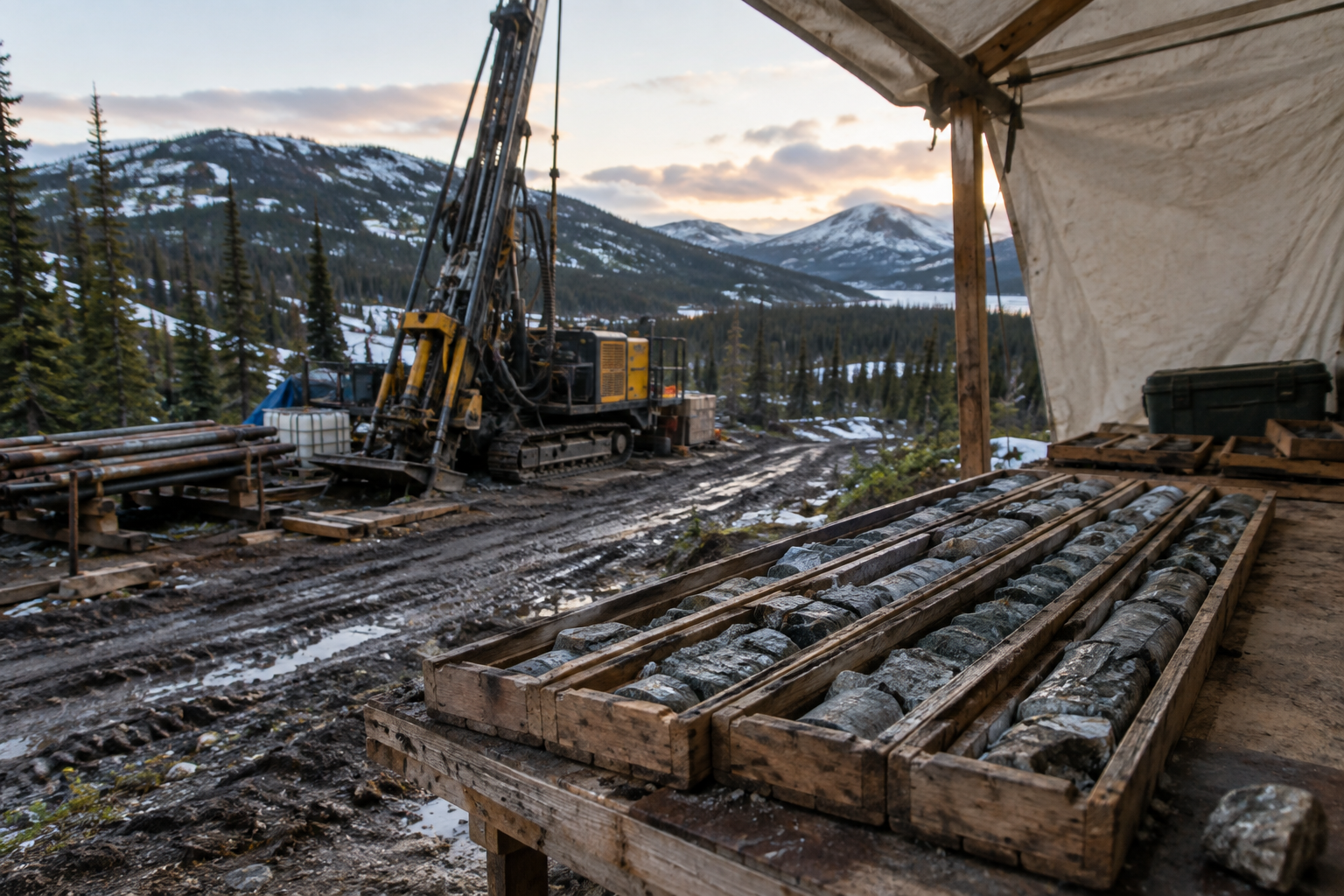
The proceeds are positioned to advance drilling, exploration and resource-definition work. That gives the financing a practical purpose beyond strengthening the balance sheet. The key question for shareholders will be whether Banyan can translate the additional capital into measurable exploration progress and clearer resource definition. The source material does not provide unsupported estimates for the amount of drilling, the timing of work or the expected geological outcome, so those remain open questions.
What the financing says about junior-gold sentiment
Junior miners frequently face a difficult trade-off: raise capital to advance a project, or conserve cash and accept slower exploration progress. Banyan's financing shows that, at least for this transaction, the market was receptive to a sizeable raise. The oversubscribed nature may suggest that gold-sector sentiment has room for companies offering exposure to Yukon exploration, although one financing should not be treated as a broad market verdict.
For investors monitoring TSX Venture activity, the deal is relevant for three reasons. First, it demonstrates that exploration companies may still be able to access substantial capital when their projects attract investor interest. Second, it creates an execution test: capital must be converted into drilling, exploration and resource-definition work. Third, it puts dilution at the center of the discussion. Financing can extend an explorer's operating runway, but issuing shares may increase the number of securities outstanding and change each existing shareholder's proportional ownership.
The execution test begins now
The headline number is important, but the next phase will be more important. Banyan's ability to deploy the financing toward its Yukon properties could shape how the market evaluates the company. Exploration results, resource-definition progress and the pace of field activity may become the evidence investors use to judge whether the financing is producing the intended strategic benefit.
The contrarian point is straightforward: a large financing is not the same thing as a completed mine or a confirmed economic resource. It is an opportunity to do more work, supported by a stronger capital position. The oversubscription suggests demand for that opportunity, while the dilution issue reminds shareholders that the funding has a cost.
That balance—capital access versus ownership dilution, and exploration potential versus execution risk—is the central takeaway from Banyan's $54.3 million financing. For the TSX Venture gold universe, it is a useful indication that investor interest can still concentrate around well-defined Yukon exploration narratives, even as the ultimate value of the capital depends on what the company accomplishes with it.
Bull/Bear Verdict
Bull Case: The $54.3 million oversubscribed financing may give Banyan greater capacity to advance drilling, exploration and resource-definition work on its Yukon properties, while suggesting meaningful investor appetite for the story.
Bear Case: The financing may increase dilution for existing shareholders, and its value will depend on Banyan converting the capital into exploration and resource-definition progress rather than merely holding a larger cash position.