
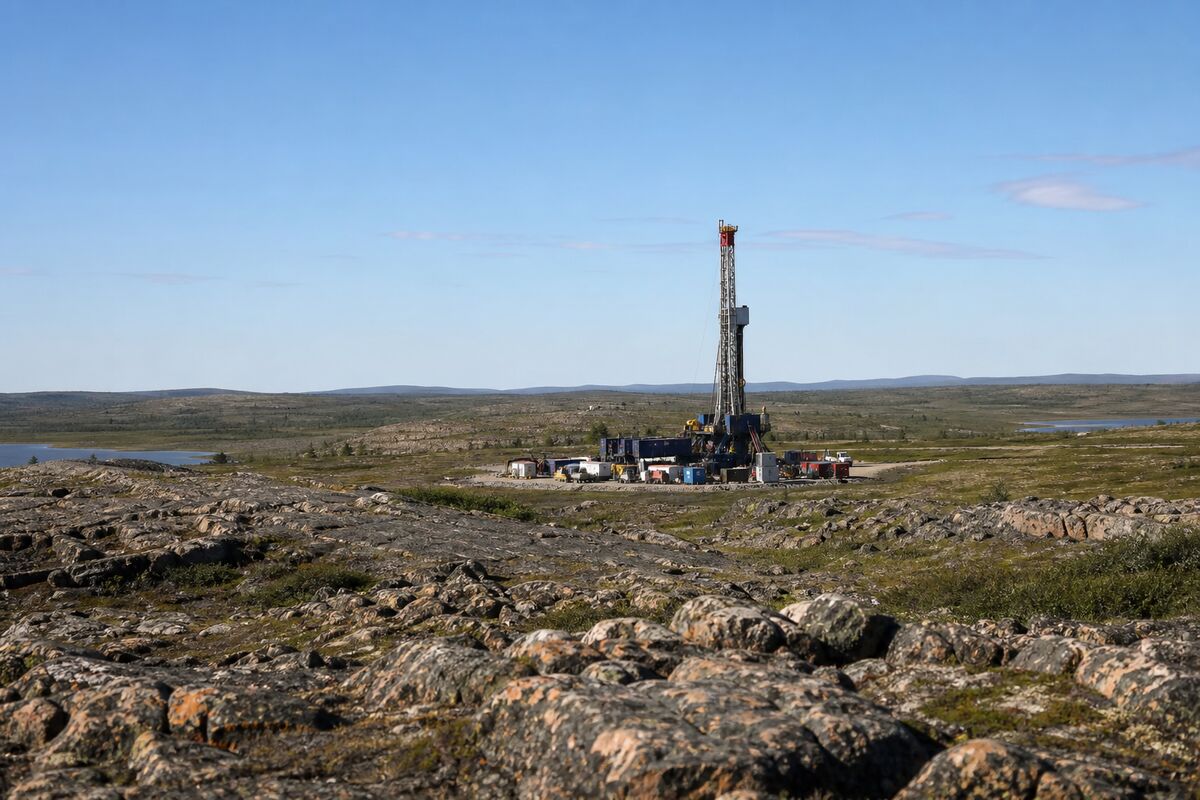
In uranium exploration, the first signal can attract attention long before the market has enough evidence to justify a serious valuation. Fortune Bay Corp. and Manhattan Uranium have now reported anomalous radioactivity in six drill holes at the Murmac and Strike uranium targets in the Athabasca Basin.
That is meaningful as an exploration update, but it is not an economic discovery. For TSX Venture traders watching Canadian critical-minerals juniors, the distinction matters: radioactivity may indicate an area deserves further work, while grades, continuity, resources and project economics remain unestablished.
What the companies reported
The companies said anomalous radioactivity was encountered across six drill holes at the Murmac and Strike targets. Fortune Bay’s filing is associated with $FOR on the TSX Venture Exchange, with Manhattan Uranium identified as the project partner or associated company in the announcement.
The results were reported in a company press release covering the six drill holes. The Athabasca Basin setting gives the announcement a clear exploration-market profile, because uranium-focused discoveries in the region are closely watched by Canadian resource investors. Still, the location alone does not turn an exploration indication into a defined deposit.
Why radioactivity matters—and what it does not prove
Anomalous radioactivity is an important piece of geological information. It can help identify drill-hole intervals and target areas that warrant additional investigation. In practical terms, the six holes provide the companies with data that may guide follow-up exploration at Murmac and Strike.
But the word “anomalous” should remain the centre of the analysis. The announcement, as described, does not establish mineralization grades, thickness, continuity or a mineral resource. It also does not demonstrate that the targets can support a mine, nor does it provide a basis for assessing project economics.
That gap between an encouraging signal and a defined asset is where junior exploration stories are won or lost. Additional drilling, assays and geological interpretation would be needed before the market could judge whether the radioactivity represents a coherent uranium system rather than isolated indications.
The trading catalyst—and the hard test ahead
Uranium exploration news can act as a catalyst for Canadian junior shares because it gives traders a fresh, company-specific development to evaluate. Six drill holes with anomalous radioactivity may expand attention around Fortune Bay and its partner, particularly among investors focused on critical minerals and Athabasca Basin exploration.
That attention should not be confused with confirmation. The next question is not simply whether radioactivity was detected, but whether subsequent work can demonstrate meaningful mineralization with continuity and economic relevance. Until then, this is a data point—not a completed investment case.
Bull/Bear Verdict
Bull Case: Anomalous radioactivity across six drill holes at the Murmac and Strike targets may support follow-up exploration and could give $FOR a fresh catalyst among TSX Venture critical-minerals traders.
Bear Case: The results do not yet establish grades, continuity, mineral resources or project economics, so the six-hole result may remain an early exploration indication rather than evidence of an economic discovery.