Junior gold financing is where investor conviction meets geological uncertainty. Labrador Gold’s decision to increase its non-brokered private placement to up to $7 million offers a clear market signal: capital may be available for credible exploration stories, particularly those positioned in established mining districts.
But this is not a producing-asset story. Labrador Gold’s Borden Lake project near Chapleau, Ontario remains an exploration project. Its appeal rests on location, historical exploration results and proximity to Discovery Silver Corp.’s Borden gold mine—not on current production or a stated resource in the information available here.
According to the company announcement reported by The Spec, Labrador Gold is increasing its non-brokered private placement to up to $7 million. The announcement does not provide financing terms or pricing in the supplied information, and those details should not be inferred.
What the financing upsize may signal
An upsized financing can be meaningful for a junior mining issuer because it suggests that the company has identified enough potential investor interest to seek a larger amount of capital than originally planned. In a sector where exploration companies depend heavily on periodic financings, the ability to pursue a larger raise may provide additional room to advance work on a project.
That is the constructive interpretation. The more cautious reading is that an upsize alone does not establish the quality of a deposit, guarantee exploration success or confirm how the market will value the company. It signals financing demand around the offering, not a completed discovery. The distinction matters: capital availability and geological validation are separate tests.
Location is the strategic variable
Borden Lake is located near Chapleau, Ontario, in the broader Ontario gold belt. More specifically, the project sits immediately southeast of Discovery Silver Corp.’s Borden gold mine. That proximity gives Labrador Gold’s exploration story a strategic frame that a remote, stand-alone property may not have.
For market participants, nearby established mining infrastructure and a recognized gold operation can make an exploration asset easier to evaluate. Location may help focus attention on the geological setting, potential access and the relevance of future exploration results. It does not, however, eliminate the central uncertainty: Borden Lake must still demonstrate economic mineralization through exploration.
Two anomalous zones keep the story alive
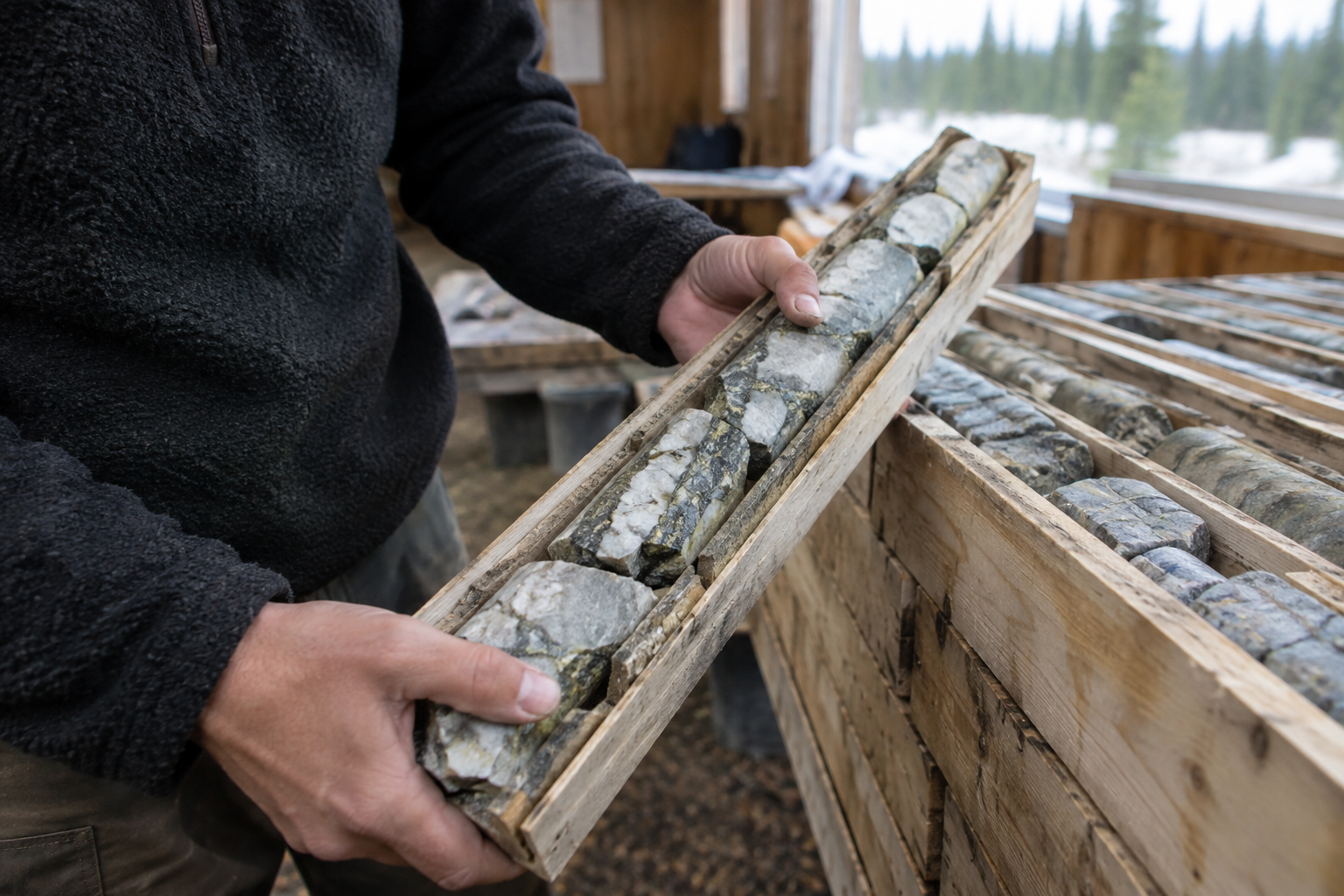
Past exploration at the site has identified two anomalous gold zones. Those zones are important because they provide the basis for continued exploration interest and give the company defined targets to investigate. They are also not equivalent to a mineral resource, a reserve or a producing mine.
This is the point often lost in junior-mining headlines. An anomaly can support a geological thesis, but follow-up work is required to determine its scale, continuity and economic significance. Investors may view the two zones as evidence that Borden Lake merits additional attention, while still recognizing that the project’s potential remains unproven.
A test for Ontario exploration capital
Labrador Gold’s financing upsize places a small but useful marker on the current market for Ontario gold explorers. The combination of a project near Chapleau, immediate proximity to Discovery Silver’s Borden gold mine and two previously identified anomalous gold zones may be helping the issuer attract capital.
The decisive question will be what the financing enables the company to do next and whether subsequent exploration strengthens the geological case. For now, the $7 million target indicates that investors may be willing to fund exploration exposure in an established Ontario setting—but the project remains an exploration opportunity, not a producing asset.
Bull/Bear Verdict
Bull Case: The upsize to up to $7 million may indicate investor demand for Labrador Gold’s Ontario exploration exposure, supported by Borden Lake’s location near Chapleau, immediate southeast proximity to Discovery Silver Corp.’s Borden gold mine and two anomalous gold zones.
Bear Case: The financing upsize does not establish a mineral resource or production, and the two anomalous gold zones remain exploration targets whose scale, continuity and economic significance have not been demonstrated in the supplied data.