
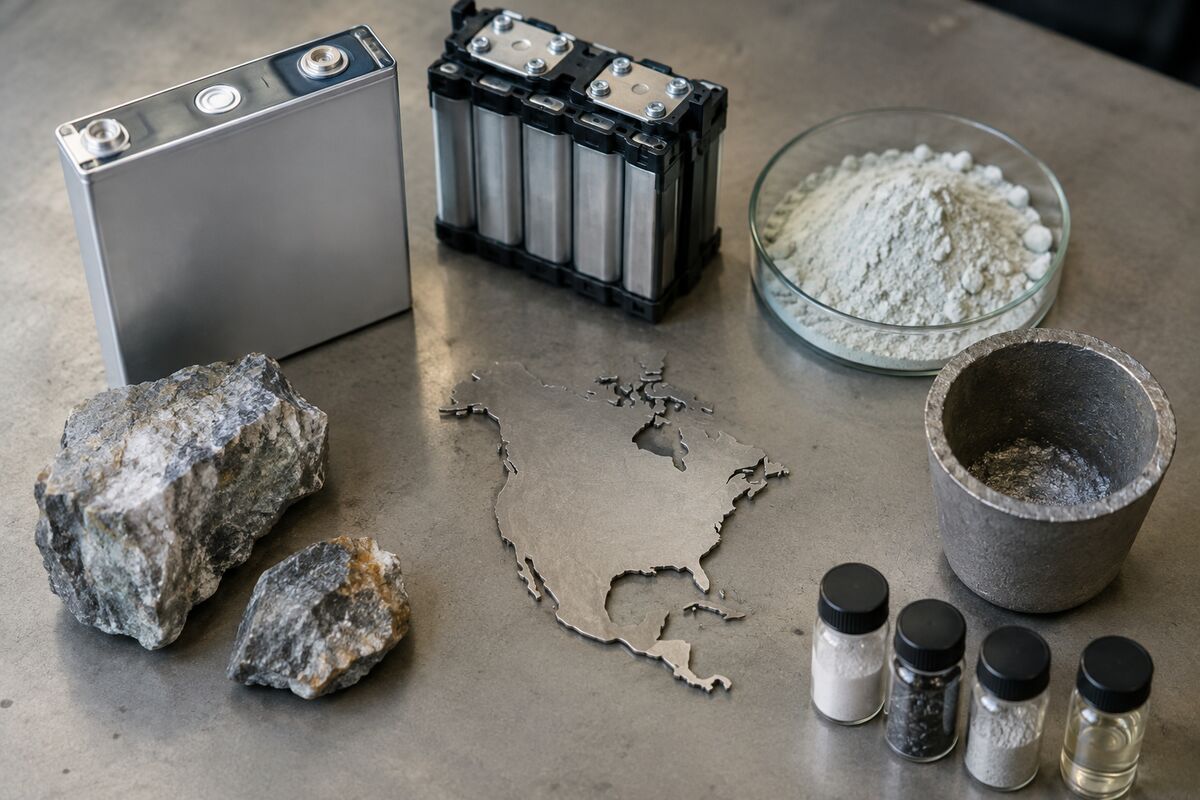
In critical minerals, policy access can matter—but it is not the same as geological success. SAGA Metals Corp. has joined the Canadian Chamber of Commerce and its Critical Minerals Council, aligning the junior explorer with a broader North American effort to build domestic supply chains and reduce dependence on China.
The announcement gives $SAGA a seat closer to the policy conversation. It does not, however, change the company’s exploration status or provide evidence of a new commercial asset. That distinction is the one investors need to keep firmly in view.
What SAGA announced
SAGA Metals Corp. announced on Nov. 6, 2026, that it had joined the Canadian Chamber of Commerce and its Critical Minerals Council. The company trades on the TSX Venture Exchange under $SAGA and on the OTCQX market under $SAGMF.
According to the reported announcement, SAGA is a North American exploration company focused on critical-mineral discoveries. Its council membership places the company within an advocacy and policy network focused on the development of critical-mineral supply chains.
Why the policy backdrop matters
Canada and its North American partners are seeking to strengthen domestic sources of critical minerals, processing capacity and related supply-chain infrastructure. The strategic objective is to reduce reliance on China and build greater regional resilience around materials viewed as important to industrial and national-security priorities.
For a junior explorer, participation in that conversation may provide greater visibility among policymakers, industry participants and potential strategic stakeholders. It may also help SAGA better understand the policy priorities shaping exploration, permitting, development and supply-chain initiatives.
That is the potential strategic significance. A company aligned with a recognized industry effort could be better positioned to communicate how its projects fit into broader North American objectives. But membership alone does not establish that a project will receive government support, attract funding or advance more quickly.
What investors should—and should not—infer
The announcement supports a measured interpretation: SAGA is seeking to position itself within a policy environment that favors North American critical-mineral development. That alignment may improve visibility and could become more relevant if the company later reports exploration results, a resource estimate, financing, permitting progress or a production milestone.
None of those developments is included in the source material for this announcement. There is no new discovery, resource estimate, financing, production milestone or share-price data reported here. The membership therefore should not be treated as a substitute for technical or commercial progress.
This is where promotional enthusiasm often gets ahead of the facts. Advocacy-group membership can open doors and sharpen a company’s policy profile, but it does not prove that an exploration thesis will become an economic mine. The market will ultimately demand evidence from the ground, the balance sheet and the development timeline.
The bottom line
SAGA’s entry into the Canadian Chamber of Commerce’s Critical Minerals Council is a strategically coherent announcement for a North American explorer. It connects the company to a policy push aimed at strengthening regional supply chains and reducing dependence on China. The potential benefit is visibility and alignment—not an immediate change in project value.
As of the Nov. 6 publication, the most defensible conclusion is that SAGA has improved its policy positioning while leaving its underlying exploration case unchanged. Future technical and financial disclosures, rather than the membership itself, may determine whether that positioning becomes commercially meaningful.
Bull/Bear Verdict
Bull Case: SAGA’s membership in the Critical Minerals Council may improve its visibility and policy alignment as Canada and North America pursue domestic supply chains and reduced dependence on China.
Bear Case: The announcement provides no new discovery, resource estimate, financing, production milestone or share-price data, so the commercial impact of the membership remains unproven.