Gold projects do not become mines on enthusiasm alone. Between an intriguing discovery and a construction decision sits a less glamorous, highly consequential task: proving that the deposit is understood well enough to support the next stage of development.
That is where infill drilling enters the story. At Revival Gold’s Mercur Gold Project in Utah, the work is putting a familiar but often overlooked milestone in front of investors: improving confidence in a resource before the project advances toward potential mine development.
The quiet work behind a louder mining story
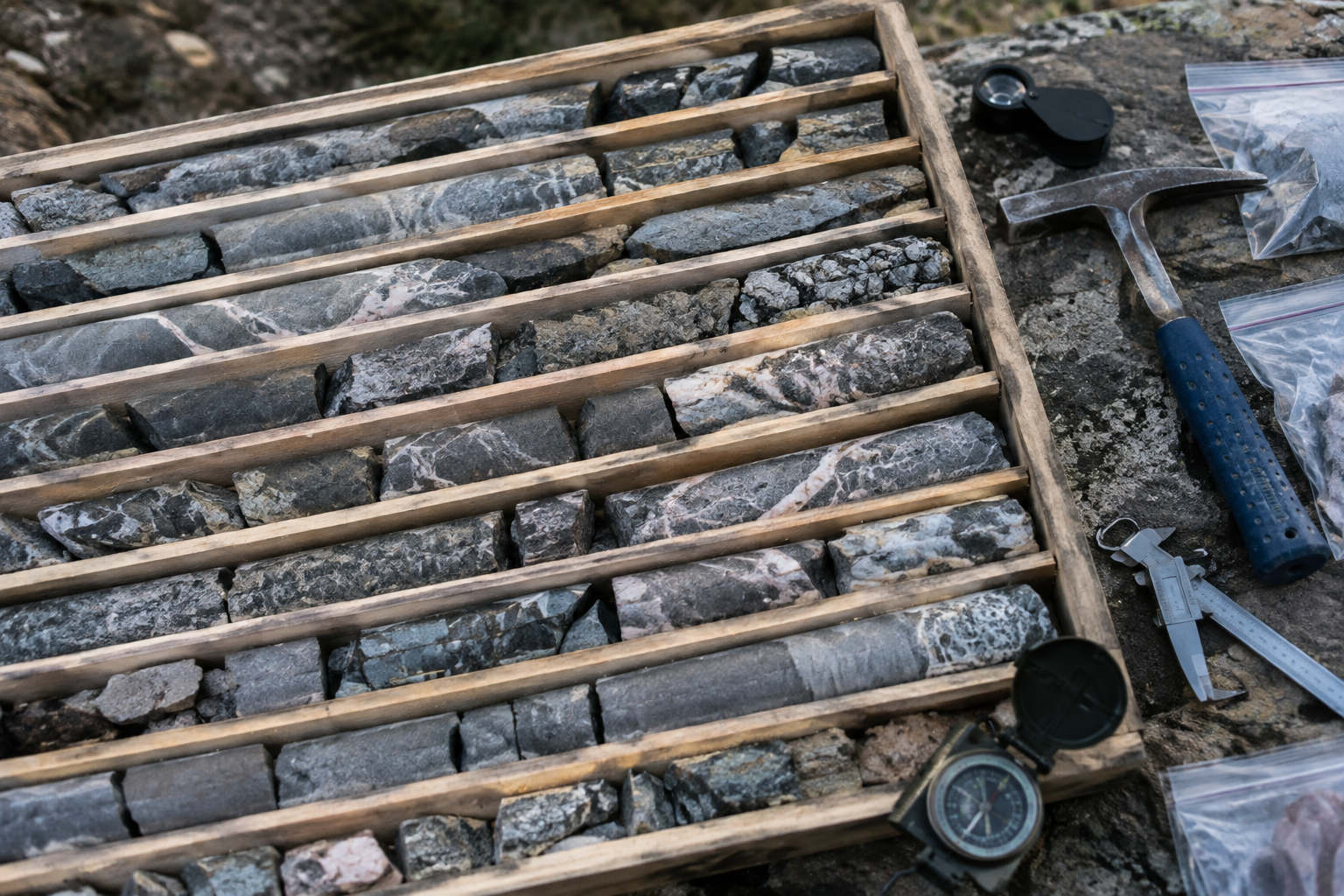
Exploration drilling is often framed as a hunt for something new. Infill drilling has a different assignment. Rather than simply extending a deposit or searching for a fresh discovery, it is intended to tighten the geological picture inside an already identified resource area.
That distinction matters because mine development depends on more than the existence of gold. Developers need a clearer understanding of where mineralization sits, how consistently it appears and how the deposit can be interpreted for future technical work. Infill drilling may help improve confidence in the resource, making it a practical step along the path toward feasibility and, eventually, construction decisions.
The process can be easy to overlook precisely because it is not always accompanied by a dramatic headline. As the source commentary on infill drilling suggests, the value of this work may become clearest when a project moves from geological possibility toward the more demanding questions of mine development.
Revival Gold’s Mercur focus
Revival Gold Inc. is advancing infill drilling at the Mercur Gold Project in Utah. The company trades on the TSX Venture Exchange as $RVG and on the OTCQX market as $RVLGF, giving investors in North American junior and over-the-counter markets a direct lens on the project’s development progress.
For Revival Gold, the significance of the program is less about an immediate promise of a new resource estimate or a production schedule—neither is supplied here—and more about the role of drilling in the development sequence. Infill work can provide information needed to refine confidence in the deposit as technical studies progress.
That makes the milestone potentially relevant to how investors assess development risk. A gold developer still faces substantial questions before feasibility and construction decisions, but a stronger geological foundation may help narrow uncertainty. The word “may” does important work here: infill drilling is a step toward mine development, not a guarantee that a mine will be built.
A useful comparison in northwest Ontario
The same development logic appears in related coverage of the Moss Gold Project in northwest Ontario, where a deposit-wide infill drilling program is associated with Argonaut Gold. The project is identified in the source material with the listings $AUXX on the TSX Venture Exchange and $AUXX on NYSE American.
Placed beside Mercur, Moss illustrates why investors may pay attention to infill programs across the North American gold-development landscape. The projects are not presented as having identical geology, economics or technical results. The connection is the development function of the drilling: increasing confidence across a deposit can support the technical work that precedes major feasibility and construction decisions.
Why the milestone can matter to investors
For investors following TSX Venture and NYSE American-listed gold companies, infill drilling may serve as a potential de-risking catalyst because it addresses a foundational question: how well is the resource understood? Better-defined information could influence later modeling and planning, although the assignment provides no new estimates, drilling outcomes or feasibility conclusions for either project.
That restraint is important. Infill drilling is not the finish line, and it does not eliminate permitting, engineering, financing or construction challenges. But mining projects are built through accumulated evidence. At Mercur, and in the contrasting Moss example, the unglamorous work of filling geological gaps may be precisely what moves a project into a more consequential chapter.
Bull/Bear Verdict
Bull Case: Infill drilling at Revival Gold’s Mercur Gold Project, alongside the deposit-wide program at the Moss Gold Project, could improve resource confidence and serve as a potential de-risking milestone ahead of feasibility and construction decisions.
Bear Case: The supplied information includes no new resource estimates, feasibility results, drilling outcomes or production timelines, so the development significance of the programs remains a step in the process rather than a confirmed project result.